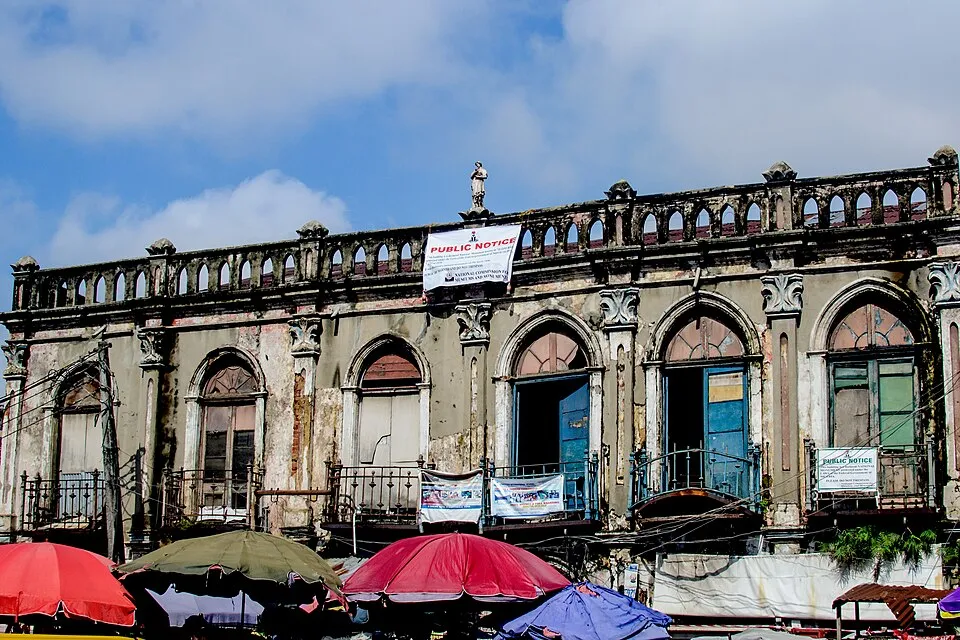
Place name · c. 1830 · Disputed
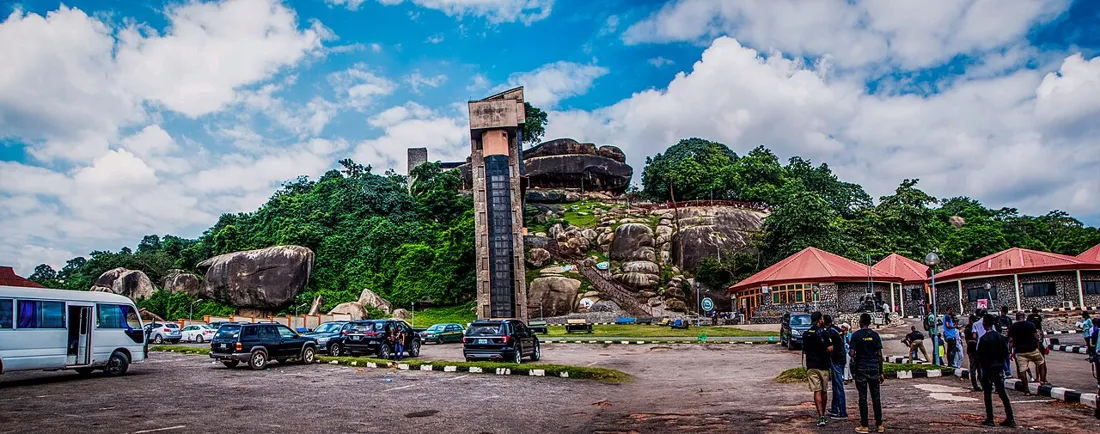
Image: Olumo Rock, Abeokuta.jpg — Adedayo Adesilola, CC BY-SA 4.0 · source
Fleeing war, the Egba found shelter beneath a great granite rock and named their new home after it.
In the early 1800s the old Oyo empire was coming apart, and the Yoruba country was at war with itself. The Egba had already broken away from Oyo's rule, but that freedom brought them little peace. Their towns were scattered through the forest, and one after another they were attacked, burned and emptied. Families who survived ran from place to place with whatever they could carry.
For a time many Egba lived at Ibadan, which was then a war camp full of fighters from many places. It did not go well. Trouble broke out with the other groups in the camp, and fearing for their lives, most of the Egba left together and camped on the far side of the Ona River, a few miles away. There they chose a leader, a war chief named Sodeke, and set out to find somewhere that could be defended.
How they found it depends on who is telling the story. The best-known version says a hunter named Adagba, out looking for game, came upon a great hill of grey granite near the Ogun River. A guide at the rock today tells it a little differently: he says the Egba sent scouts ahead, and the scouts met Adagba, a hunter and farmer, who told them the land by the river was good and the rock was a fortress. Another guide at the same rock says Adagba was a woman. All the versions agree on what Adagba showed them. There was a huge rock with caves and crevices running through it, and from the top you could see an enemy coming long before he arrived.
Around 1830, Sodeke led the main body of the Egba to that rock. There was only a small farming village there then. The people climbed up into the caves and made it their shelter. In the hollows of the rock the women hid with the children and the old people, while the men stood guard along the edges where no enemy could climb up behind them. You can still see the holes worn into the cave floors, where the women pounded yam and ground pepper to feed everyone.
When people asked the Egba where they had been hiding, the story goes, they said they had been under the rock. In Yoruba that is Abeokuta, and that became the name of the town. The rock itself was called Olumo. The usual meaning given is "God moulded it", or "God built it". One of the guides at the rock tells it as the place where God put an end to the Egba's wandering.
The town grew fast. Refugees from many destroyed Egba towns came in, and so did many Owu people, whose own city had fallen to its enemies some years before. But the newcomers did not melt into one community. Each group settled in its own quarter and gave it the name of the home it had lost, so Abeokuta became a cluster of little towns inside one wall, with names like Ake, Owu, Itoku and Ikija. That pattern still shapes the city today. Sodeke led them through these first years. One account says he died in 1842; another says January 1845.
The town's biggest test came in March 1851. King Gezo of Dahomey marched on Abeokuta with an army of about 16,000, and thousands of those soldiers were women, the famous women warriors of Dahomey. On the way his army passed through the small town of Isaga. The people of Isaga pretended to help him, and then gave him the worst advice they could. Don't attack at night, they said, attack at noon, when the men are out at the farms. Don't go for the north-west, where the wall was in fact falling down. Go for the south-west, where the wall had just been repaired. They even led his army across the river at a deep spot, so that much of its gunpowder got wet. Then they secretly sent a warning to Abeokuta.
At noon on the third of March the attack came. The Egba held the wall, then spread out along it and got around the side of the attackers. By evening Dahomey was pulling back. The Egba chased them all the way to Isaga and beat them again there. Accounts say more than 3,000 Dahomeans were killed and about 1,000 taken prisoner. In 1864 Dahomey came back to try again, and it was beaten a second time.
Olumo Rock stands about 137 metres above sea level in the old heart of Abeokuta, and it is now one of the best-known places to visit in Nigeria. At the gate is a sign that says Olumo Rock Tourist Complex. Inside there is a museum, and lifts now run up the rock for anyone who does not fancy the climb. But visitors and guides alike say the real fun is in taking the old stairway, climbing through narrow gaps in the rock and over stones of every size, stopping now and then to catch your breath and enjoy the breeze.
The rock is not just a tourist site. For the Egba it is still sacred. They see it as the place that protected their ancestors, and every year sacrifices are offered at its shrine. The Alake of Egbaland, their paramount ruler, goes into the shrine to pray for the Egba people and for the whole country. Priestesses still live on the rock and still see people who come with problems.
On the way up, guides show you the caves where families hid, and the hollows in the floor where food was pounded. Near the top grows an iroko tree that is said to be more than 200 years old. People say it never withers and never drops its leaves, whether it is the rainy season or the dry season.
Then you reach the summit. The whole of Abeokuta lies below you: rusty roofs packed close together, the Ogun River curving past, the city's central mosque. From up there it is easy to see what Sodeke's people saw. A rock this high, with caves this deep, must have looked like a fortress that God had built for them.
Not every story told on the rock agrees with the history books. One guide says the great Egba hero Lisabi led the people to Olumo in 1830. Most accounts put Lisabi's revolt against Oyo in the 1700s, long before Abeokuta existed. Both stories are told side by side, and the Egba are happy to keep Lisabi's name close to the rock that saved them.