Legend · 1949–2025
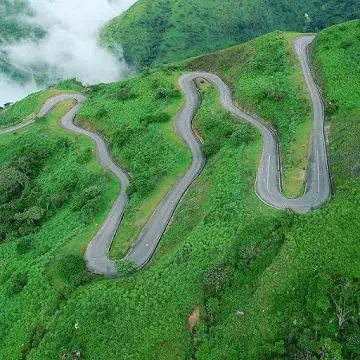
Image: Obudu ranch resorts.jpg — Nwibo David, CC BY-SA 4.0 · source
Nigeria's most famous mountain resort started because a vet flying over the plateau noticed the cows looked unusually healthy. Then 500 longhorns walked in from Cameroon.
Up in the far north-east of Cross River State, close to the Cameroon border, the land rises into the Obudu Plateau. At about 1,600 metres above sea level it is a different country from the hot lowlands below. The air is cool, and mornings can be properly cold. Visitors are told to pack warm clothes, which is not advice you hear often in Nigeria.
The story of the ranch starts in 1949 with a veterinary surgeon named M. McCaughley, who worked for the Veterinary Department of the Eastern Region. Punch tells it this way. McCaughley was on a helicopter flight from Enugu to Calabar when he looked down and saw open land on the plateau, with cattle grazing on it. What caught his eye was how healthy the cattle looked. He went back to explore. The plains of the plateau roll on into what is now Cameroon, and he climbed up onto it from the Cameroon side.
According to Wikipedia, McCaughley, described as a Scot, camped on the mountaintop of the Oshie Ridge in the Sankwala Mountains for a whole month. Picture it: a single tent on a high ridge in the clouds, a long way from any town, with someone watching the grass and the weather and the animals and slowly deciding that this could work. He came away convinced that the plateau, if it were properly developed, could become an important cattle-grazing area for Nigeria, and he put the idea to the government.
The government liked it. And this is the part people often skip. The plateau was not empty land. It had owners. On 28 September 1950, the Eastern Region government signed an agreement with the landlords of the Obudu Plateau, who were represented by Ikpe Temaka Akwo Nda and Momo Uganda. Whatever came later, it started with a deal with the people whose land it was.
Ranching began in January 1951. The pioneer manager was Hugh Jones, a fellow rancher, and he did not start small. He came in from Cameroon with 500 long-horned cattle bought from Fulani herders in the Bamenda Highlands. Think of that herd climbing up onto the plateau, a long line of horns moving over the grass.
Wikipedia says McCaughley came back in 1951 with Jones and a Dr Crawfeild, and that together they developed the ranch. It was backed in the 1950s by the Eastern Region Development Corporation, which put money into the ranch as a business.
Here the sources start to disagree. The same Punch article, in another paragraph, calls Hugh Jones the Scottish rancher who founded the ranch in 1949, and says the development corporation bought it from him in 1951. The spellings of the vet's name also vary. So who really founded Obudu? The fairest answer is that McCaughley seems to have spotted it and proposed it, and Jones seems to have run the first herd. You can choose your own founder.
What is clear is that a regional government thought ranches were serious business. The old regional governments set up ranches across Nigeria to earn money, create jobs and organise cattle farming, and Obudu was one of them.
The second phase made Obudu famous. Chief Michael Okpara, Premier of Eastern Nigeria, turned it into a holiday spot. His biographer Chris Offodile writes that his government built the ranch and hotel complex and was launching Eastern Nigeria into what could have become a thriving tourist industry, had the civil war not got in the way. The tourist resort was finished in 1962. To this day, a sculpted cow's head on the entrance gate remembers where it all began.
The place had a second life under Donald Duke, governor of Cross River from 1999 to 2007. He rebuilt the old resort and added a helicopter pad, a water park, 20 new mountain villas and a cable car. Since 2005 that cable car has climbed 870 metres from the base to the top of the plateau, saving visitors from the twisting road. In 2005 the ranch was also privatised and renamed Obudu Mountain Resort. Today it is officially called Obanliku Mountain Resort.
Then came the slide. Punch reports that the decline started with the privatisation process. A company called Farm Fresh ran cattle and dairy there for a while. When it left, the dairy side collapsed. For years the cable car was grounded for lack of maintenance and the airstrip stopped working. A deal with CIBA Construction, in partnership with Marriott, was supposed to bring it back. It did not finish the job, and on 10 March 2025 Cross River State took the resort back. People in the area celebrated.
So the plateau is waiting again, as it was in 1949, for someone to look at it and see what it could be. The cows are still the reason it has a name.