Lost history · 1925–1936 · Disputed
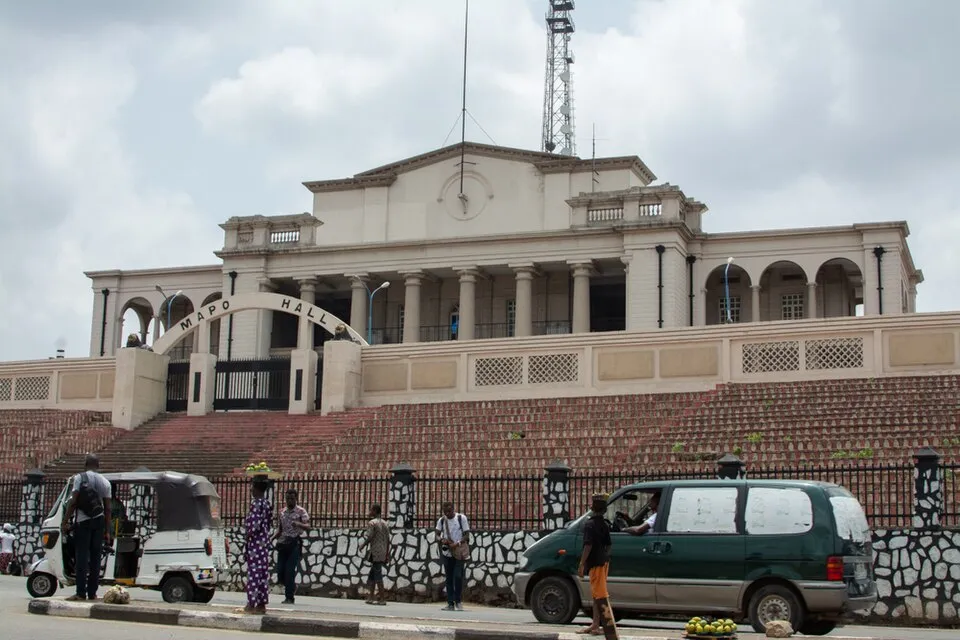
Image: Mapo hall Ibadan-0278.jpg — Olasunkanmiariyo, CC BY-SA 4.0 · source
Mapo Hall and Bower's Tower are on every Ibadan postcard. The Welsh engineer who built them is almost forgotten, and so are the men who carried the stones.
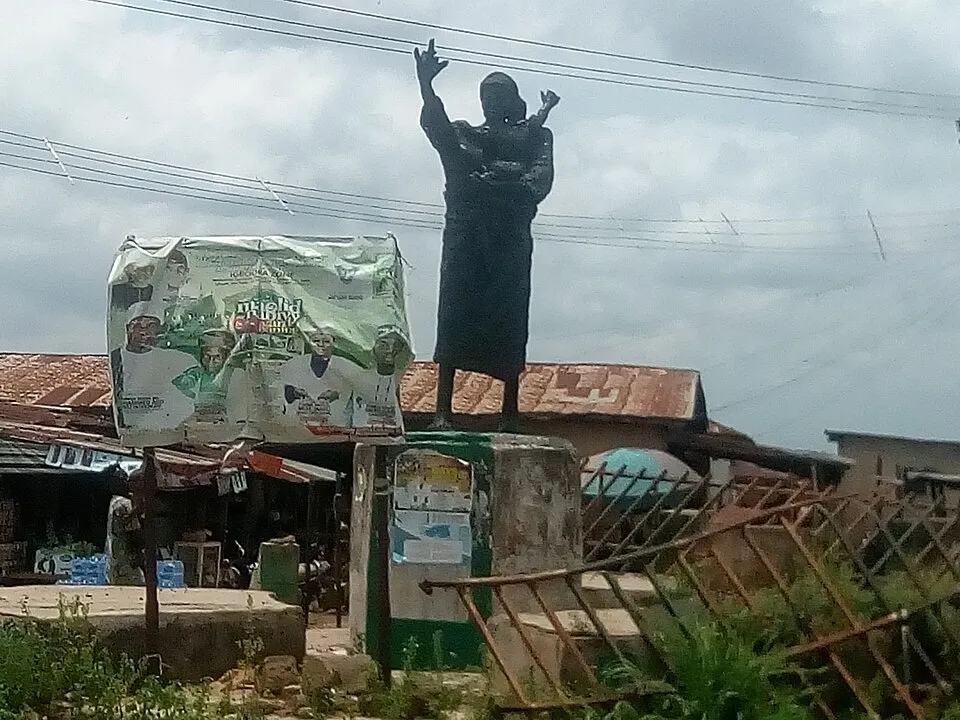
Stand almost anywhere in old Ibadan and look up, and there it is: Mapo Hall, sitting on top of Mapo Hill with a row of eight huge pillars across its front, like a grand old uncle keeping an eye on the city. Mapo Hill is one of the oldest parts of Ibadan. The Tribune says the first settlers there were refugee warriors running from the wars further north, who arrived in 1829. Today the area is crowded and busy, the Olubadan's palace is a short walk to one side of the hall, the statue of Iba Oluyole is a short walk to the other, and Oja'ba market spreads out below.
The hall was the British government's idea. In June 1925 Captain W. A. Ross, the Resident of Oyo Province, laid the foundation stone. Building took four years and cost about £24,000, a huge sum then. The hall was opened by the Governor, Sir Graeme Thomson, at a time when Ladigbolu was Alaafin of Oyo and Oyewole was Baale of Ibadan. Even the date is a little muddled. Wikipedia and National Insight say it was commissioned on 5 October 1929, Finelib says it was opened in August that year, and one Tribune feature simply says it was built in 1924.
Its style is neoclassical, the look of tall columns and wide steps that the British used on town halls across their empire. Two Nigerian websites say it was modelled on St George's Hall in Liverpool, England, which has a very similar row of columns. Those wide steps up from Ogunmola Street do a second job, too. On big days they turn into seats, and crowds sit on them to watch whatever is happening above. The man who drew all this was a Welsh engineer called Robert Jones, though nobody seems to have called him anything but Taffy, the old nickname for Welshmen.
Robert A. Jones was born in 1882 and came to southern Nigeria in 1910. From 1923 he worked for the Ibadan Native Authority as its road engineer, and he stayed in Nigeria until 1944, when he retired home to Wales. He died in 1949. Apart from Mapo Hall, he is credited with the Manor House in Iseyin and, as we will see, the tower on Oke-Are. For a man whose buildings are on postcards, he left very little trace of himself. We could not find a photograph of him, or any letter or diary in his own words.
The bigger silence is about the workers. Nobody wrote down their names. Wikipedia says the labour was provided by local people, "probably" prisoners held as tax defaulters, and Finelib repeats that some say prisoners and tax defaulters hauled the bricks. The chains on show inside the hall, which we come to next, make the story easy to believe. But "probably" is an honest word here. No source we found says how many of the builders were prisoners, or whether they were paid.
The hall does keep a small museum, and in it hang chains that Wikipedia and the Tribune both say were used to hold tax evaders in colonial times. Next to them are photographs of every Olubadan who has reigned in Ibadan. It is an odd pairing, the chains of the people who were made to obey and the faces of the kings who ruled, and it says a lot about how complicated this building's story is.
Over the years Mapo Hall became the place where Western Nigeria's politics happened. On 5 May 1955 the NCNC held its convention there, and Nnamdi Azikiwe gave his address. In May 1967, as the country slid towards civil war, Obafemi Awolowo told the Western Leaders of Thought at Mapo that he could "see no vital and abiding principle" in a war between the North and the East. Campaigning in 1983, he said there that the lion would rather hunt alone than carry the tiger's bag. The Tribune says a party that never campaigned at Mapo was not taken seriously. More recently, Governor Abiola Ajimobi crowned twenty-four new Ibadan kings there. The hall was given a facelift under Governor Alao-Akala amid some argument. Wikipedia dates the work to 2006, with Olusegun Obasanjo reopening the hall on 6 September 2007, while the Tribune says 2008.
Jones's other famous work sits on Oke-Are, the highest hill in the city. Bower's Tower is about sixty feet tall, with around forty-seven spiral steps to the top, and it was put up in 1936 in honour of Captain Robert Lister Bower, the first British Resident and Travelling Commissioner for the interior of Yorubaland from 1893 to 1897. Ibadan people call it Layipo, from the way you turn round and round climbing it, and they say that if you have not climbed Layipo, you do not really know Ibadan.
Here, too, memory gets tangled. Residents told The Nation in 2013 that Bower himself unveiled the tower in 1936, though his posting had ended almost forty years earlier, and the same article names the unveiler as a "Sir Robert Tower". So the man is remembered, just not quite correctly. Taffy Jones, who designed it, is hardly remembered at all.