Place name · 1891 treaty; house built c.1919-1920s · Disputed
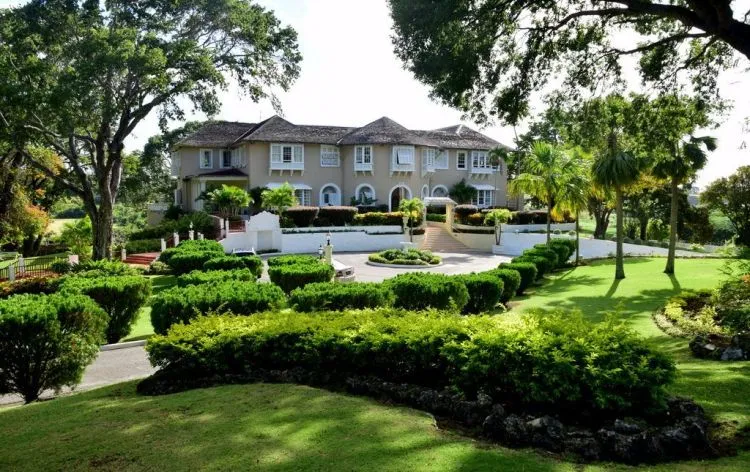
Image: Ilaro Court.jpg — Barbados National Trust, CC BY-SA 4.0 · source
The Prime Minister of Barbados has an official home called Ilaro Court. The name comes from a town in Ogun State, and nobody quite agrees why.
Ilaro is the headquarters of Yewa South in Ogun State, about fifty kilometres from Abeokuta, and it is the seat of the Olu of Ilaro, who today is counted as the paramount ruler of all Yewaland. It is a town of farmers, timber mills and gari processing, a busy, ordinary sort of place. So it is a genuine surprise to learn that, thousands of kilometres away on the Caribbean island of Barbados, the official home of the Prime Minister carries its name. Before we cross the ocean, it is worth knowing a little about the town itself.
The people of Ilaro trace their beginnings to a hunter and farmer called Aro, who came down from Oyo. The town's own history says he arrived around 1650; Wikipedia places him in the 18th century. Either way, the settlement became known as Ilu Aro, the town of Aro, and the name was worn down over time into Ilaro. Both accounts also remember a warrior called Orona, who came to help when the town was being raided by fighters from Dahomey to the west, and who beat them back. Wikipedia says the Orona Ilaro festival is still held every year in his honour.
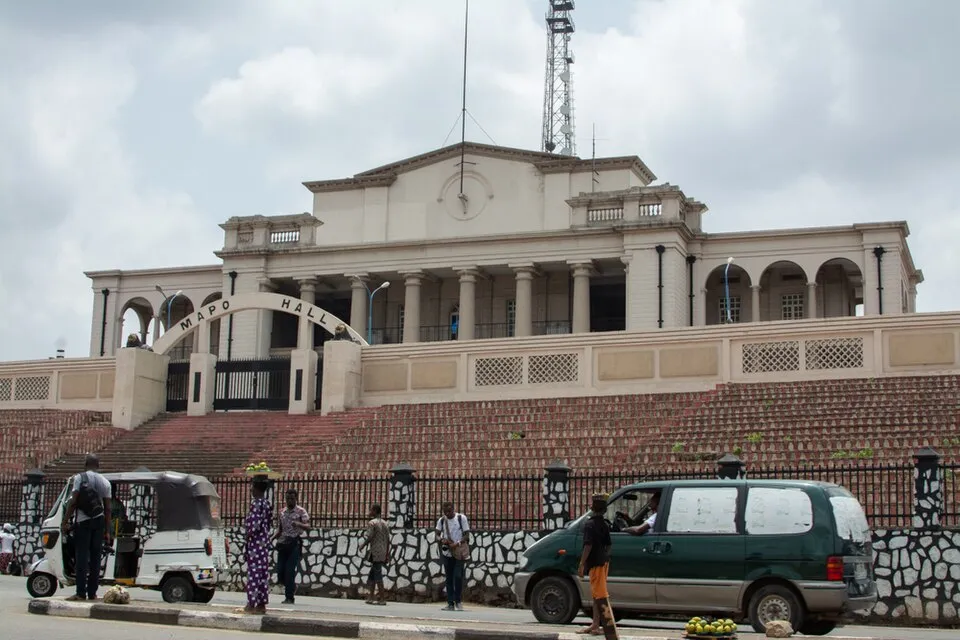
Then, near the end of the 19th century, the British arrived. Worried about French influence in neighbouring Dahomey, they set up a post at Ilaro in 1890. On 12 August 1891 the British flag was raised in the town, and the next day a treaty placed the kingdom of Ilaro under the protection of the British queen. The town's own history says this followed a request from Oba Tella of Ilaro and Falola of Oke-Odan. A photograph of the king of Ilaro and his wives, taken at that flag-raising, is kept today in Cambridge University's library. The man who raised that flag was not Gilbert Carter, the governor this story is really about. It was the acting governor, George Chardin Denton. Hold on to that detail, because it matters later.
Gilbert Thomas Carter was a Devon man who started out as a clerk in the Royal Navy and spent his working life moving from colony to colony. He was a customs officer and treasurer on the Gold Coast, then ran the Gambia, and in February 1891 he was appointed Governor of the Lagos Colony. That made him the British official in charge of Lagos and the territories attached to it, Ilaro among them. He was not a gentle governor. In 1892 he ordered the attack on Ijebu, and in 1893 he toured Yorubaland with soldiers, signing treaties with the Egba and the Alaafin of Oyo, work for which he was knighted. The Carter Bridge in Lagos is named after him.
From Lagos he went on to govern the Bahamas, and in 1904 he became Governor of Barbados, a post he held until 1911. Along the way, in 1903, he married his second wife, Gertrude Codman Parker, an American artist from a well-known Boston family. Barbados's National Conservation Commission says she took drawing classes and made the grand tour of Europe as a young woman, which fed a lasting love of art and architecture.
It was Lady Carter, not her husband, who designed Ilaro Court. She built it on the site of an older house called Glenelg, which had belonged to a solicitor, Charles W. Fleming, on Two Mile Hill in St Michael. The house is laid out around a rectangular courtyard looking onto a swimming pool, and Wikipedia says it was the first pool on the island. Edward, Prince of Wales, swam in it when he visited Barbados in 1920. The dates are a little muddled. The Pocket Guide says the design was finished in 1919 and the house built in the 1920s, while the Commission talks of it being bought and rebuilt in the late 1910s. Wikipedia adds that Sir Gilbert himself came back to live there in the early 1920s, and died at Ilaro Court in 1927.
After the Carters, the house went quiet. The Commission says the government bought it in 1976, meaning to turn it into an arts centre, and then left it to decay. Wikipedia says the purchase came in the 1980s, under Prime Minister Tom Adams. Either way, the plan changed. The grounds were replanted, the house was refurbished and filled with antique furniture, much of it, Wikipedia says, made by prisoners at Glendairy prison, and it was officially opened on Independence Day, 30 November 1980. In 1984 Tom Adams and his family moved in. Sadly, he died there the very next year, of a heart attack in the study. Since then most of the island's prime ministers have lived there, and the house is still used for state functions and for Carols by Candlelight at Christmas.
Now for the puzzle. Every Barbados source agrees the house is named after Ilaro in Nigeria, but they cannot agree why. The Commission says Carter had been "Governor of Ilaro". Wikipedia says Ilaro was where he was "stationed when he was an officer". The Pocket Guide calls Ilaro a "state" where he was based. None of these quite fits his recorded career. He was never stationed at Ilaro as a junior officer, and there was no such job as Governor of Ilaro. He was Governor of the whole Lagos Colony, and even the flag at Ilaro was raised by his deputy.
So why did Lady Carter choose that name, out of every town her husband ever knew? We could not find her own answer anywhere. Perhaps Ilaro, taken under British protection in his first months, simply stayed with him. What we do know is that a small Yewa town, founded by a hunter from Oyo, ended up written on a gate in the Caribbean, on an island where many people have African roots of their own.