Lost history · 16th–early 17th century · Disputed
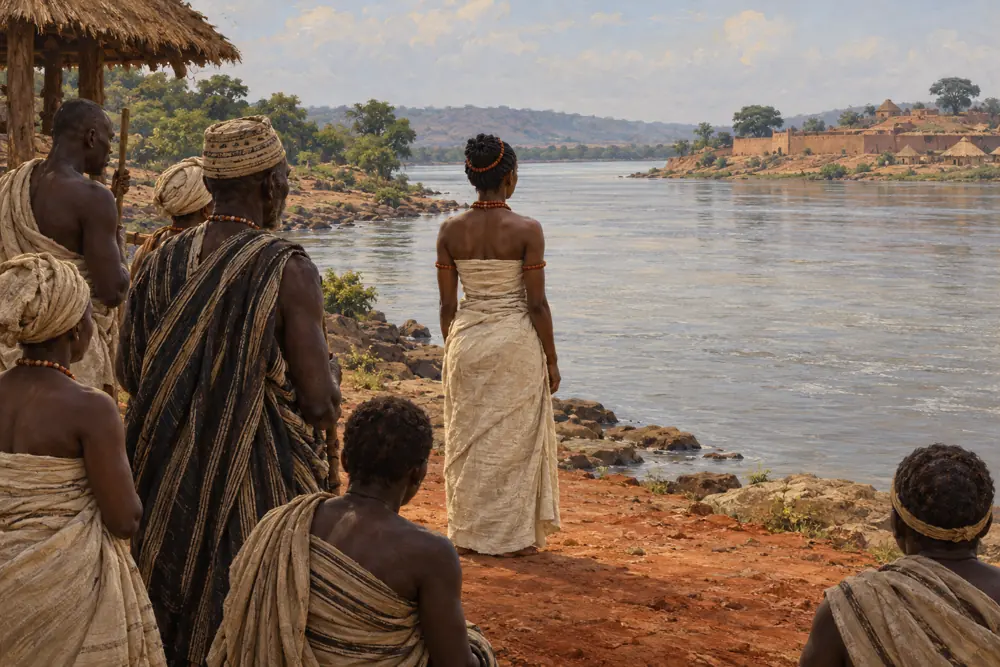
Image: Generated illustration — AI-generated for Naija Tales, reviewed for accuracy, Generated illustration, not a historical photo
Before the Oyo Empire became the great cavalry power of West Africa, its kings were refugees. For decades they ruled from Igboho, and the stories from those years include a warrior queen and a king who caught ghosts.
Oyo-Igboho today is a busy Oke-Ogun town of more than a hundred thousand people, the headquarters of Orelope Local Government. You would not guess, walking past its markets, that for a long stretch of the sixteenth century it was the seat of the Alaafin of Oyo, the most powerful king in Yorubaland. To see how that happened, start with a disaster.
By the end of the 1300s Oyo had grown into a strong inland kingdom, with its capital at Oyo-Ile in the northern savannah. Its neighbours to the north-east were the Nupe, whom the Yoruba called Tapa. The two peoples had once been close; Oyo tradition even gives the god-king Sango a Nupe mother. But by the early 1500s they were enemies. During the reign of Alaafin Onigbogi the Nupe beat Oyo again and again, and around 1535 they took the capital itself and sacked it.
Onigbogi fled north into Borgu, the land of the Bariba, and died there. Samuel Johnson, the Oyo pastor who wrote down these traditions in the 1890s, says he was not used to the hardships of exile. His son Ofinran grew up a refugee in a strange country. Oyo histories speak of an interregnum of around eighty years, a whole lifetime in which the royal house had no proper home.
The way back was slow. The Oyo learned from the people who had beaten them. They took up armour and, above all, horses, the cavalry that would later make them feared from the Niger to the coast. Ofinran won back old Oyo land, and a new capital rose at Igboho, a place with strong natural defences that tradition says was ringed by three walls. Sources disagree on who actually founded it. Some credit Ofinran, others his successor Eguguojo. What they agree on is that it worked. Behind those walls, the dynasty caught its breath.
Of all the rulers who reigned at Igboho, the one people argue about most is Orompoto. The king lists name Orompoto as the sister of Eguguojo, who took the throne because there was no suitable man in the family to succeed. If that is right, she was the first and only woman to rule as Alaafin in her own right. Some historians who have studied the royal traditions think that is exactly what happened. Others are not so sure, and some oral versions add a twist: that she was miraculously changed into a man before she took the throne. That part is tradition, and it tells you more about how later storytellers felt about a woman king than about what happened.
Whoever Orompoto was, the memory is of a fighter. She is said to have been a superb rider who used horses, probably bought from Borgu, on a scale Oyo had not tried before, and to have formed a special cavalry order under the Eso Ikoyi, the elite war chiefs. She turned on the Nupe to make sure they could never threaten Oyo the way they had under Onigbogi.
There is a vivid battle story from her reign, at a place called Ilayi. Oyo lost three of its senior war chiefs, the Gbonka, one after another. The third, the story goes, died with his face frozen in a grin. The enemy thought he was still alive and laughing at them, decided they could not beat such men, and ran. Oyo claimed the field. Some accounts say Orompoto herself died in that fighting, which would make her the first Alaafin to fall in battle.
After her came Ajiboyede, a strong and harsh king. With the Nupe beaten, Igboho had peace, and it grew. Two big markets opened and the town sat on the road for horses coming down from Hausaland. Ajiboyede is credited with the first Bebe festival, a celebration of peace that lasted for years. His temper was another matter. When his eldest son, Arema Osemolu, died and the king fasted in grief, he reportedly had some visiting chiefs killed for eating, and nearly started a revolt.
The last Alaafin of the Igboho years is Abipa, and his name is itself a little story. Tradition says he was born on the road while the royal party was travelling towards Igboho, so he was called a bi si ipa, one born by the wayside. He grew up in the exile capital, but he wanted to go home. When the Nupe and the troubles at court had both been dealt with, Abipa decided to move the throne back to Oyo-Ile, the old city his ancestors had lost.
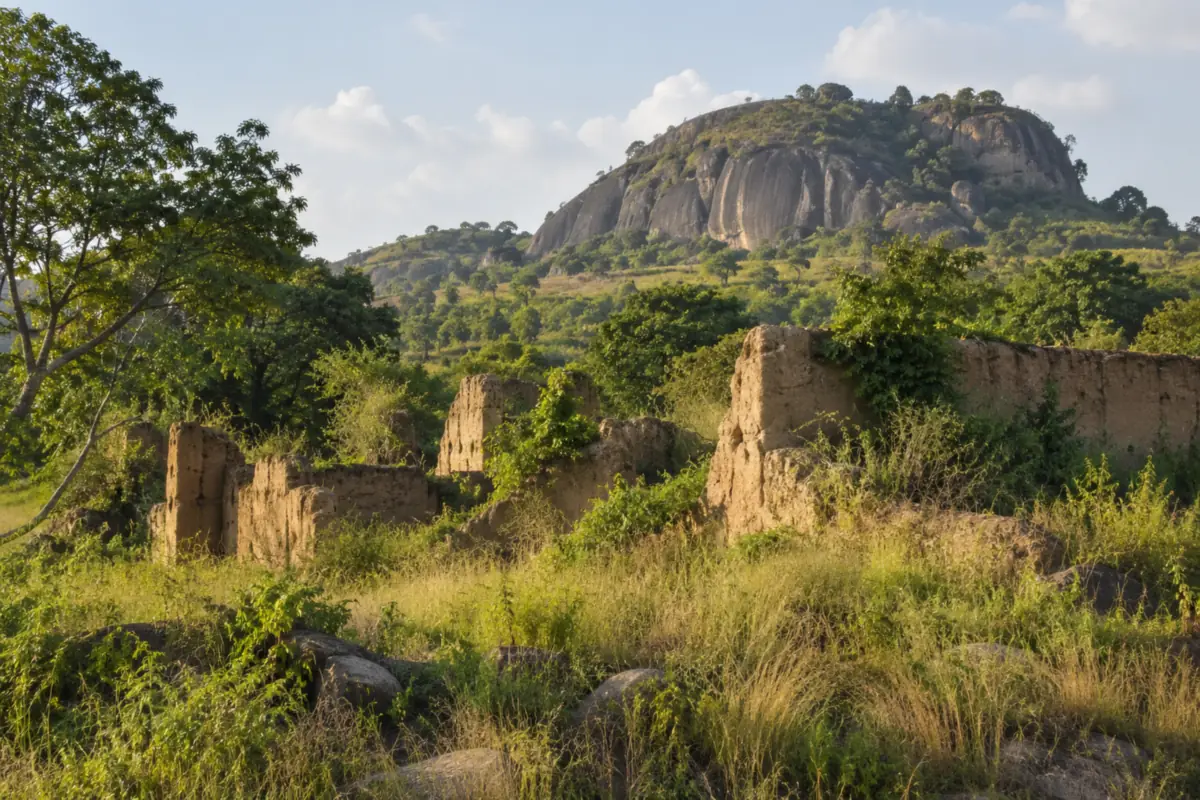
Not everyone liked that plan. Igboho was now a comfortable, rich town, and some nobles had built their lives there. According to tradition, when Abipa sent an advance party to look over the ruins of Oyo-Ile, these nobles had people dress up as spirits and haunt the site, hoping the king's men would report that the old capital was cursed. Abipa saw through it. He sent hunters into the ruins, and they rounded up the ghosts, who turned out to be ordinary men in disguise. That is why one of his names is Oba m'oro, the king who caught ghosts. The scene is still acted out in Oyo during festivals and at the installation of a new Alaafin.
His praise poetry remembers a darker detail too: that when the royal party entered Oyo-Ile he offered his newborn son as a sacrifice for peace. Like the ghost hunt, that comes to us through tradition, not written record.
Abipa's return, in the early seventeenth century, opened the great age of Oyo, when its horsemen made it the leading power of the region. Igboho went back to being a provincial town. But it kept something no other place has. Tradition holds that four Alaafins from the exile years lie buried there, at a site called Igbo Oba, cared for by a local chief, the Aare of Igboho.