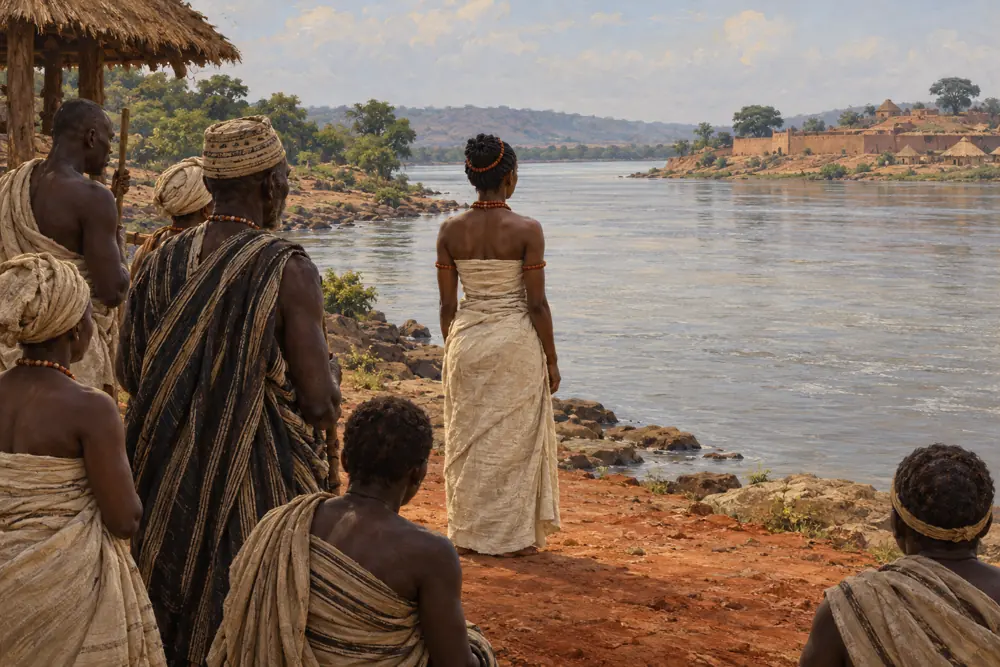
Legend · Early 16th century in tradition
Image: Generated illustration — Generated with an AI image tool for this site, Generated illustration, not a historical image
In Igala tradition, a daughter discovers her father's terrible secret and offers her life to protect their kingdom.
In Igala tradition, there was a time when Ayegba Oma Idoko, the Attah of Idah, stopped eating. He sat alone. He would not say what was wrong.
His daughter Inikpi noticed. She kept asking until he told her.
The kingdom was in danger. An army from Benin, the old kingdom centred on Benin City, was coming against Idah. Ayegba had asked the oracle how to save his people, and the oracle had answered: bury your daughter alive. Most tellings put this in the early 1500s.
This is the part the Igala remember most. Inikpi did not run or beg. She agreed. If her life would save Idah, she said, then take it.
She was buried alive on the bank of the Niger. The stories say nine slaves were buried with her. Their names are not remembered.
Then the Benin army came. As they drew near, the legend says, they saw Idah in flames, the whole town burning. There was nothing left to conquer, they thought. So they turned back.
Idah had not burned. It was saved, and the Igala credit Inikpi.
Whether any of this happened as told, nobody can prove. It is a sacred story, not a battle report, and even the people who tell it disagree on details, such as whether she was the king's only daughter.
But the memory is real. A statue of Inikpi stands at Ega in Idah, near the river where she is said to lie. Igala parents still name their daughters after her.
It is a hard story to tell children: a girl who gave up her life because her elders asked her to, with nine others buried beside her whom nobody remembers. The Igala tell it anyway. Five hundred years on, Inikpi is still their great heroine.