Lost history · c. 1466 to present · Mixed
No matching image yet, so this page uses a plain title card instead of a photo.
The Emir of Kano still lives in a palace founded in the 15th century. Its own history says the builders pointed it at Mecca by reading the night sky, long before anyone in the region had a compass.
Muhammadu Rumfa ruled Kano in the second half of the 15th century. The emirate's own history says he flourished between 1466 and 1499. He is remembered for many things, but the one you can still walk into is his palace. Kano people call it Gidan Rumfa, Rumfa's house, or simply Gidan Sarki, the king's house.
Before it, Rumfa had lived in a smaller house built for him as a young prince, the place now known as Gidan Makama. The new palace was meant to be something different. It was built, the emirate says, to open a new era of Islamic influence in Kano. And Rumfa did not plan it alone. He was guided by Shaykh al-Maghili, a scholar from North Africa whose advice shaped Kano in those years.
The palace went up on what were then the outskirts of the town. That pushed Kano outwards, and the Kurmi market grew up near it.
Then there is the detail that makes the place special. The emirate's history says the palace was lined up with the Ka'aba in Mecca, the direction Muslims face in prayer. When the orientation was checked, it was found to be strikingly exact. That kind of precision was unusual even in North Africa until the 18th century, when the compass is thought to have come into use. Rumfa's builders had no compass. They are said to have found their direction by the stars at night.
It is worth being careful here. This is the emirate's own account, written for an illustrated biography of an emir. But it is a lovely picture all the same: builders in 15th-century Kano using the night sky to work out the line to a city thousands of kilometres away, and laying mud walls along it.
The palace has never stopped changing. It began as the seat of a sultanate. Under Sarkin Kano Sulaiman, who ruled from 1807 to 1819, it became the seat of an emirate. The Fulani leaders who took power in the jihad kept Rumfa's palace rather than building their own. In 1903 the British conquered Kano and the emirate became a Native Authority under a colonial Resident. By 1999, the emirate says, the Native Authority had been stripped of all its executive, legislative and judicial powers. Through all of it, the same compound stayed the home of Kano's ruler.
Almost every emir left his mark. Ibrahim Dabo, who ruled from 1819 to 1846, built Soron Mallam and Dakin Shekara, rooms that still play a part when a new emir is installed. Abdullahi Maje Karofi built the famous southern gate, Kofar Kudu. Sarkin Kano Bello, who ruled from 1883 to 1893, built Soron Bello and the mosque at Kofar Kudu. Sarkin Kano Shehu, from 1919 to 1926, built Soron Shehu.
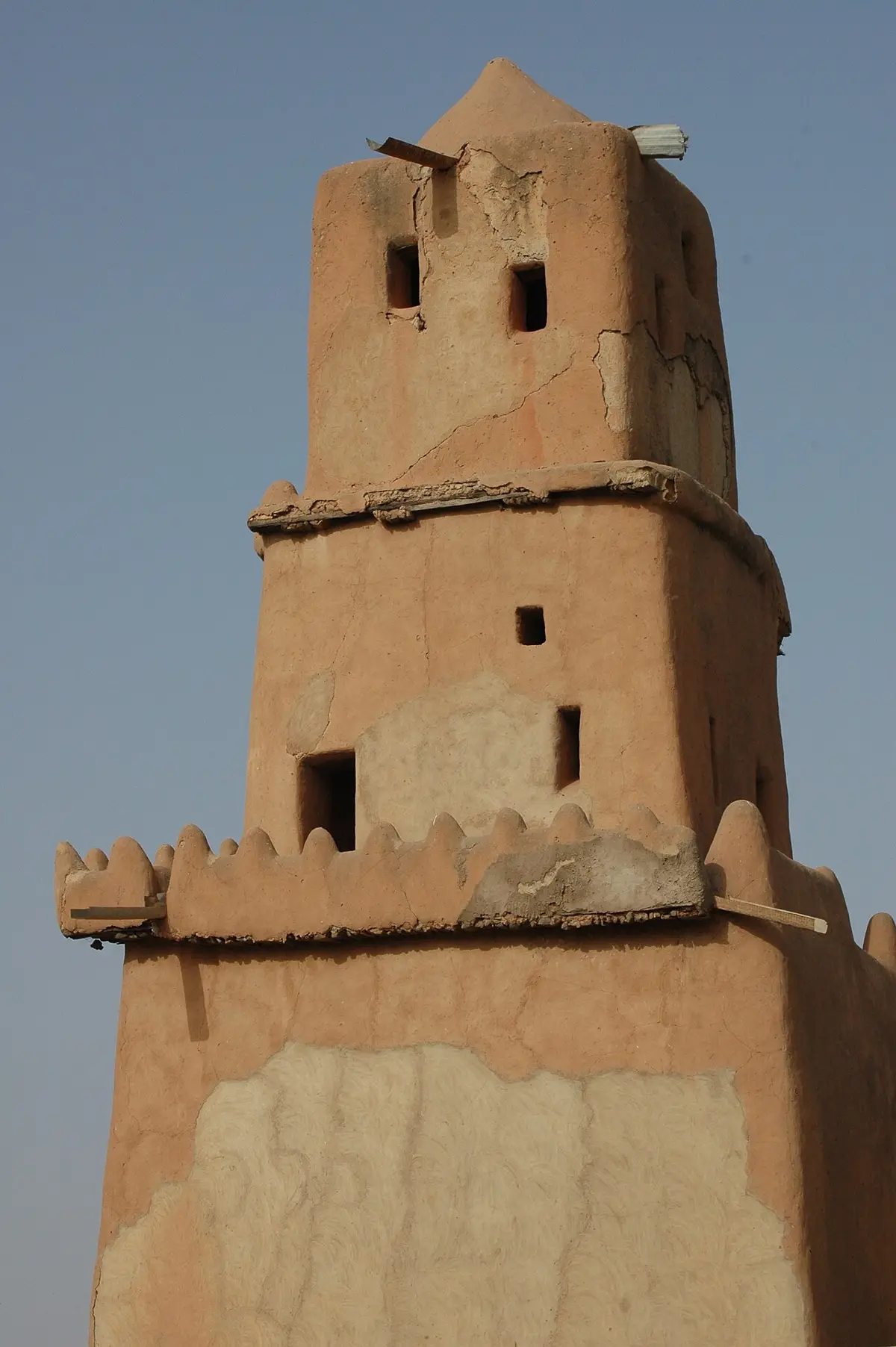
The great builder of the 20th century was Abdullahi Bayero, who reigned from 1926 to 1953. He brought modern construction into the palace. He changed its look too, painting it white instead of the old red. He built houses and courts, and above all Soron Ingila, the English hall, which served for eighty years as the court where the emir received guests. He also put up the Dogon Gida, the tall house, in the emir's private quarters, and in his time the Farin Gida, the white house, rose in a garden called Shekar Jimina, the garden of the ostrich.
His son, Sir Muhammadu Sanusi, who ruled from 1953 to 1963, kept building. He added a council chamber, a court house at Kofar Kudu and a new northern gate, Kofar Mota, the motor gate. His works were famous enough to be sung about. The praise singer Jankidi described the new two-storey office in verse: no one has an office like this, with three ceiling fans and four lamps, the Emir's throne in the middle, the chief scholar on the eastern side, the Emir's servants on the other, a knife and a sword hanging on the wall, a waiting area for people bringing complaints, and running water and a restroom.
Jankidi sang about the gardens too. In the palace, he said, the dry season had been turned into the rainy season, with water running over the ground and plants growing inside the house. He even claimed the Emir had told the Queen that Kano was the England of Hausaland.
Later emirs carried on. Ado Bayero, who reigned from 1963 to 2014, the longest reign of his dynasty, fenced the palace with concrete blocks for the first time, covering the old mud walls. He added a guest wing, a library, and a new residence called Sabon Gida, the new house.
Today the palace is enclosed by walls up to about 4.6 metres high. Inside are gardens, courts, offices, a mosque, a primary and secondary school and living quarters. Up to 200 people live in the Emir's private quarters, and more than a thousand live within the walls. The emirate calls Gidan Rumfa the oldest continuous seat of authority in sub-Saharan Africa, arguing that no other palace in the region has stayed a seat of power since the 15th century.