Legend · 15th century to present
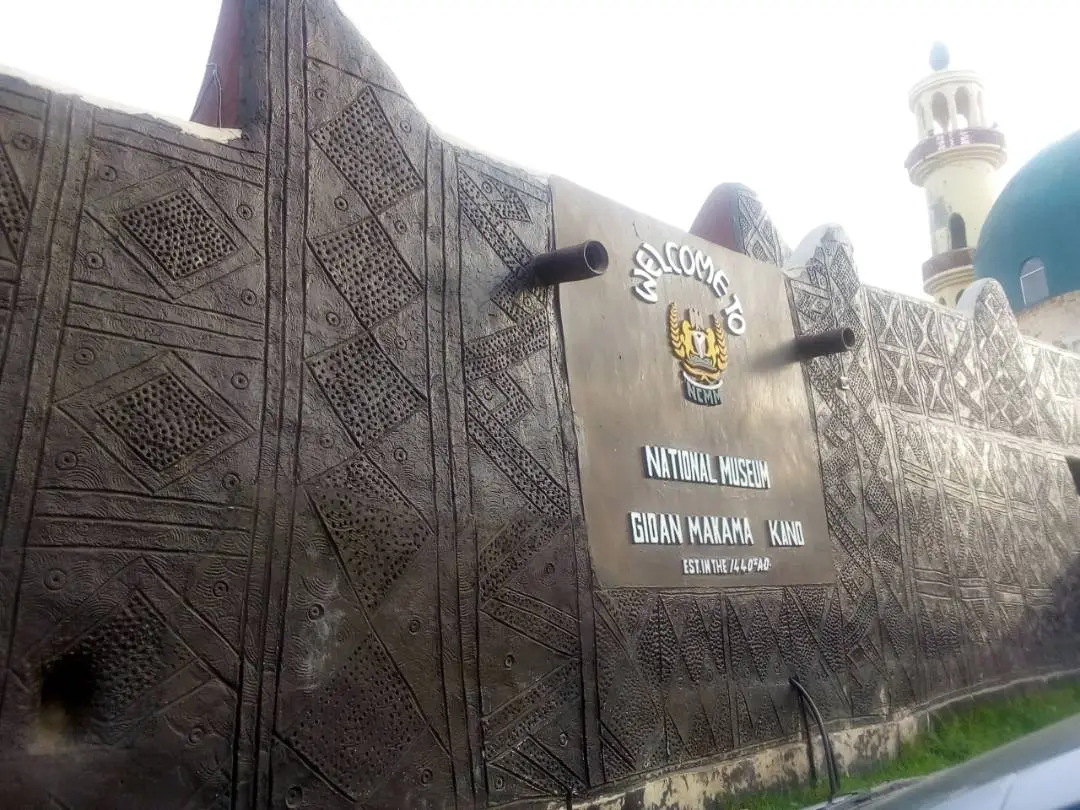
Image: Another side of Gidan Makama Museum Kano.jpg — Wikimedia Northern Nigeria, CC BY-SA 4.0 · source
Most visitors walk into the Kano Museum to look at old things. Few realise the building itself is one of the oldest things there, a 15th-century house built for a young prince before he became king.
On Emir's Palace Road in old Kano there is a mud-walled compound that most people know simply as the museum. Its proper name is Gidan Makama, the house of the Makama. To understand why it matters, you have to go back to the 15th century and to a young man who had not yet become one of Kano's most famous kings.
The house was built for Muhammadu Rumfa. At the time he was a young grandson of the Hausa ruler of Kano, and he had just been given a traditional title, Makama Kano. A titled prince needed a proper home, and this was it.
Then Rumfa became king. Kano tradition says the house served as the temporary palace of the Hausa kings of Kano before the great palace was ready. When the new palace, Gidan Rumfa, was built in the 15th century, the king moved there, and it has been the seat of Kano's rulers ever since. Gidan Makama went back to being what its name says. The Makamas who came after Rumfa lived in it, one title-holder after another.
So the building that now holds Kano's past is older than the palace it once stood in for. It is a little like discovering that the guest house is older than the mansion.
Its walls tell the same story. It was built of mud, the way great Hausa houses were built in that period, with rooms arranged around courtyards. Some modern repair work has been done over the years, but the layout still shows how a Kano aristocrat lived: an entrance hall, private rooms deeper inside, and open courtyards in between. The building is now recognised by the Federal Government as a national monument.
Gidan Makama's quiet life ended in 1903. That year the British captured Kano, and for a short time the old house was used as an office for colonial officers. The building that had once housed a Hausa prince became a desk for the men who had just conquered his descendants.
Afterwards the compound was split into three. One part became a museum, run by the Department of Antiquities. Another part became a primary school, with children learning their lessons in the rooms of the old Makamas. The third part kept doing what the house had always done, and stayed a home.
Today it is one of the museums run by the National Commission for Museums and Monuments, and one of the old structures that still show off traditional Hausa architecture. The rooms and courtyards themselves have become the galleries. You are not looking at a display about how a nobleman lived. You are walking through his house.
The welcome starts at the entrance. Some old pots stand there, believed to have been dug up at Kofar Kabuga, one of the gates in the Kano city wall. Next to them are two colonial cannons. The two objects make a neat summary of Kano's history before you have even gone in: the city's own deep past on one side, and the guns of the conquest on the other.
In an open space inside, a Koroso dance and drama group performs, so the museum is not always a quiet place. Its collection of arts, crafts and objects from the Kano area is a significant one.
The museum is divided into eleven galleries, and walking through them in order is like walking through Kano's history.
The first gallery is about Hausa building itself, with the materials people in Kano used to put up houses like this one. The second holds the Kofar Kabuga gate, through which the British entered and captured Kano, along with a map of the city walls. The third tells Kano's old religious history in pictures, together with the story of the early newcomers led by Bagauda, the legendary first king.
The fourth gallery covers the Fulani-led history that began in the 19th century. The fifth tells the story of the Kano civil war. The sixth is about the old Kano economy and the durbar, the great horse parade. The seventh covers the colonial years, with pictures of political figures of the 20th century.
The last four are about daily life and faith. The eighth shows the Islamic heritage of Kano's people. The ninth is about work, with farm tools, basketwork and textiles. The tenth holds musical instruments. And the eleventh is a traditional Hausa bride's room, set up as it would have looked, which many visitors remember most.
There is something fitting in where it all ends up. A house built for a young prince, which stood in for a palace, then served the men who took Kano, then taught its children, now keeps Kano's memory. Muhammadu Rumfa moved out more than 500 years ago, but his first house is still working.