People · 1901 to 1919
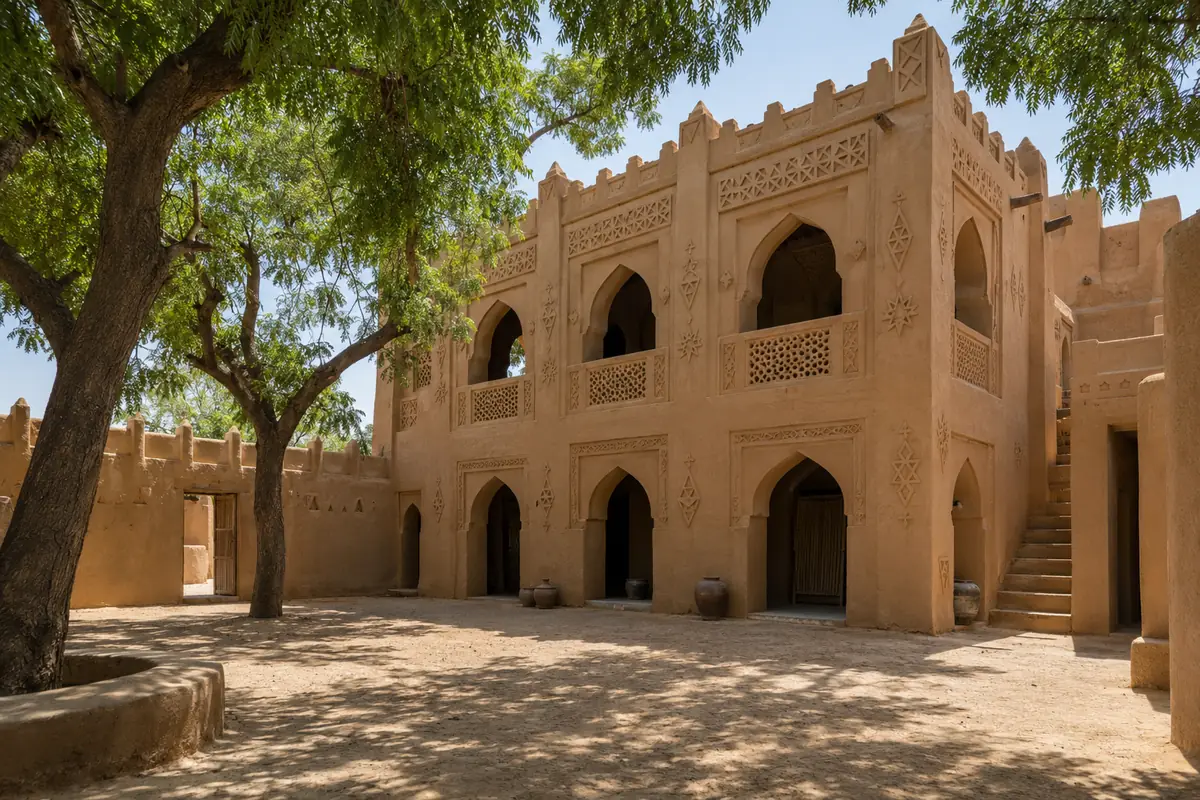
Image: Generated illustration — AI-generated for Naija Tales, reviewed for accuracy, Generated illustration, not a historical photo
A Swiss-born missionary crossed the Sahara by caravan, learned four northern languages, and opened the first non-Qur'anic schools in Northern Nigeria. Kano remembered him as Dan Hausa.
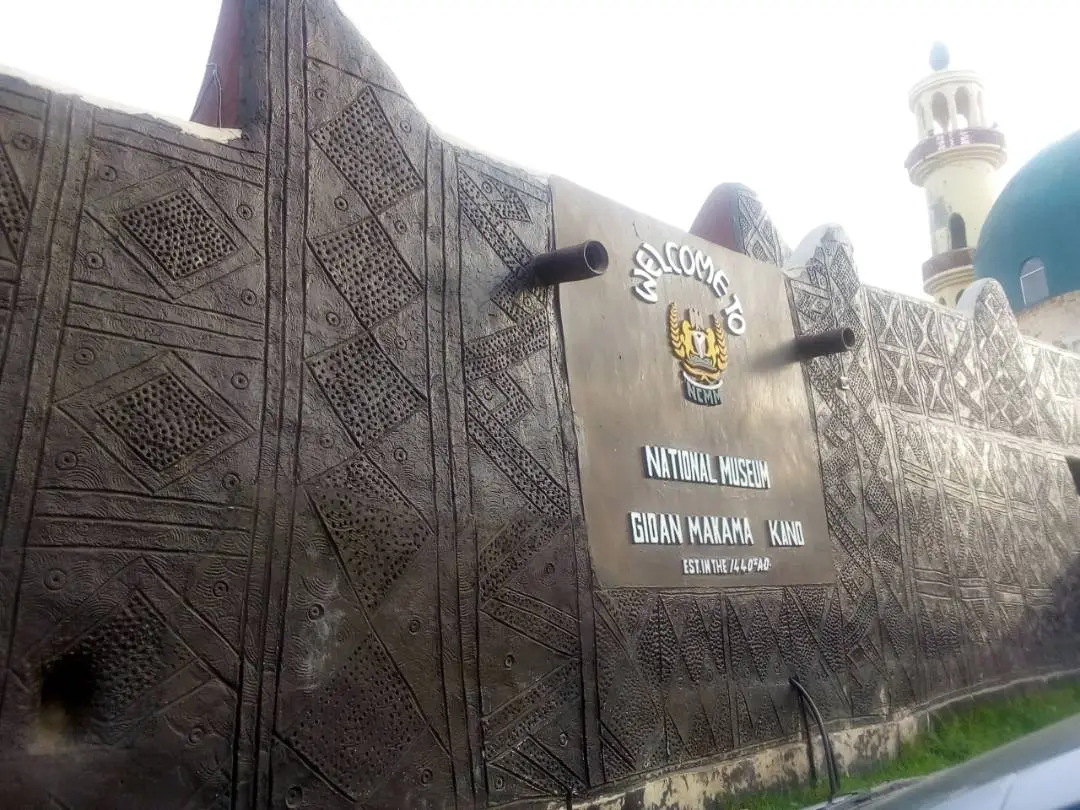
In the old city of Kano there is a building called Gidan Dan Hausa, the house of the son of Hausa. Today it is a museum and cultural centre. The man it is named after was not Hausa at all. He was born in Switzerland, to a family of silk and textile traders in Basel. His name was Hanns Vischer, and his path to Kano was a strange one.
Vischer was born in 1876. His father, Adolphe, was a writer and humanitarian, and his grandfather Wilhelm was a Protestant professor at the University of Basel. He was schooled in Basel and in Niesky, Germany, then moved to England, where he studied at a college in Ramsgate and then at Emmanuel College, Cambridge, earning both his bachelor's and master's degrees.
Near the end of his studies he became interested in African peoples and their cultures. He took a course in the Hausa language in Tripoli, of all places. After Cambridge he spent a year at Ridley Hall, a training college linked to the Church Missionary Society.
In 1901 he travelled to Nigeria with a group of CMS missionaries visiting Hausaland. It did not go well. His time in Lokoja was cut short by repeated attacks of fever, and he had to go back home to recover. Many Europeans in that period never came back after a first round of fever. Vischer did.
He returned in 1903 as a naturalised British subject. He gave up missionary work, which he had loved, and joined the colonial service as an Assistant Resident. His first posting was in Bornu, in the far north-east.
There he heard about the old caravan routes between Tripoli on the Mediterranean and Bornu, the routes along which goods, pilgrims and enslaved people had moved for centuries. In 1906 he decided to travel one himself. He crossed the Sahara from Tripoli to Kukawa, the old Bornu capital, partly to study the cultures that might have shaped the Kanuri.
His travelling companions say a lot about that road. There were freed slaves, pilgrims coming back from Mecca, camel drivers and guides from Niger. This was not a colonial officer moving with an escort. It was a European walking an African trade route with the people who actually used it.
By then he could work in Arabic, Hausa, Fulani and Kanuri. In 1908, when the colonial government wanted someone to start an industrial school at Nasarawa in Kano, he was the only person recommended. Part of the reason was his languages. The other part was that he was known to be sympathetic to the cultures of the north. Before he began, he was sent to Egypt and Sudan to study the kuttabs, the Qur'anic schools, and other schools in places like Mansoura, Bulaq and Giza, to see how education was being done in other Muslim societies.
What he built in Kano is the reason the house still carries his nickname. By 1911, under his policy, there was an elementary school, a training school for mallams, a school for the sons of emirs and a technical school. These were the first non-Qur'anic schools in the Northern Protectorate. Accounts of the house say the schooling began right there, in his own home, with 30 pupils in 1909. By 1913 it had 209 students drawn from 11 northern provinces. In four years a classroom in one man's house had become the place the whole North sent its boys.
His stated aim is the interesting part. The schools were not supposed to turn northern children into Europeans. The goal, according to the history of his work, was to keep the culture and social life of Northern Nigeria intact while training young people to work in the Native Administration and in crafts. You can argue about how well that worked, and many have, but it was a different idea from the mission schools of the south.
The schools grew. In 1913 new provincial elementary schools opened in Katsina and Sokoto. When Nigeria was amalgamated in 1914, Vischer was made Director of Education for the Northern Region, the first to hold that role. There is a twist here too. Although he held the title, he spent most of the First World War working for the War Office and the British secret intelligence services. He left the colonial service in 1919.
He did not leave Africa behind. In 1923 he became honorary secretary of the Advisory Committee on Education in Britain's African colonies, and he served on it for sixteen years. A year later he was involved in founding the International Institute of African Languages and Cultures. He died in 1945.
Kano kept the name it gave him. Dan Hausa, son of Hausa, is a warm title for a foreigner, and the house where his schooling began still stands under it.