Lost history · 1953 · Disputed
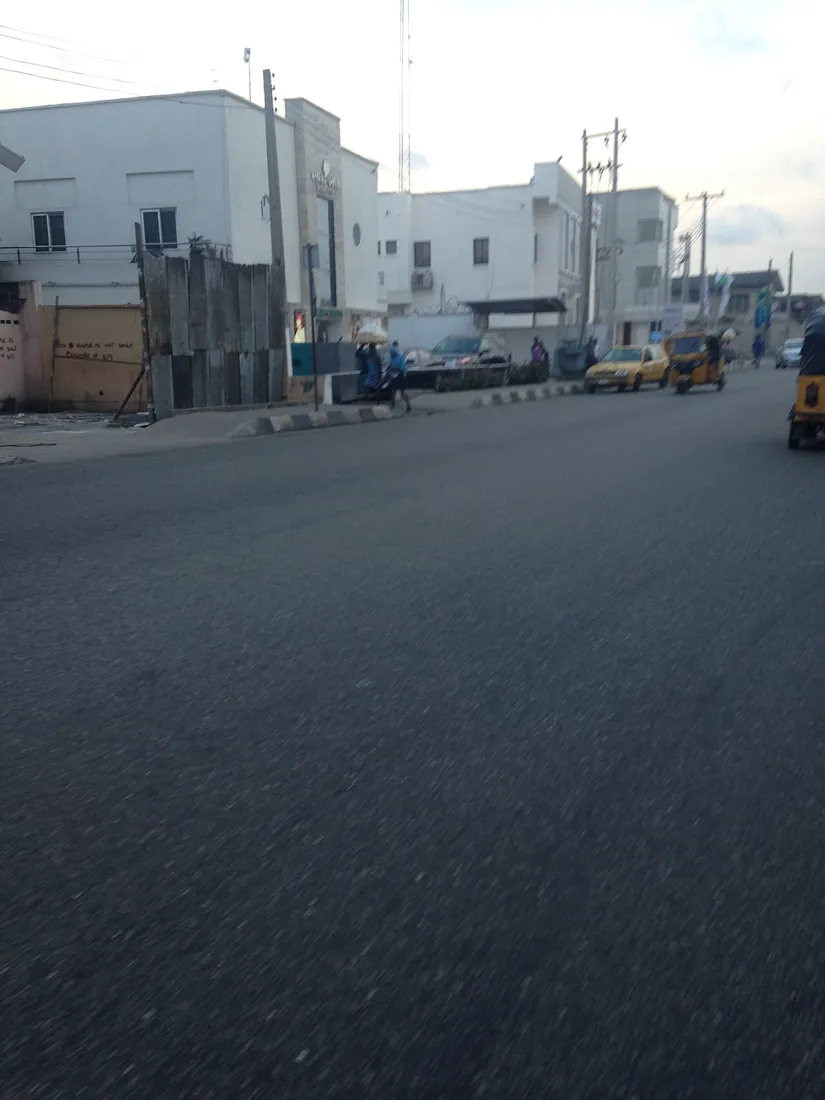
Image: Bode Thomas Surulere Lagos.jpg — Seun alone, CC BY-SA 4.0 · source
A brilliant Lagos lawyer, a proud king, and a death that people still argue about seventy years later.
If you have ever sat in traffic on Bode Thomas Street in Surulere, you have been honouring a man most Lagosians cannot describe. Olabode Akanbi Thomas was born in Lagos in October 1919. His father, Andrew Thomas, was a wealthy trader and auctioneer whose family came from Oyo, and that Oyo root would matter more than anyone could have guessed.
Young Bode was clever and in a hurry. He went to London to read law. He was called to the bar in 1942 and came home to build one of the busiest practices in Lagos. In 1948 he joined two other rising lawyers, Frederick Rotimi Williams and Remi Fani-Kayode, to set up the firm Thomas, Williams and Kayode.
Politics pulled him in fast. In 1946 he became legal adviser to the Egbe Omo Oduduwa, the Yoruba cultural society, and he was one of the founders of the Action Group, the party Obafemi Awolowo built in the West. Under the 1951 constitution he became the country's first Minister of Transport, and later Minister of Works. People who worked with him called him brilliant, logical and a workaholic. People who crossed him called him arrogant and hot-tempered. Many thought he would be a premier one day.
Off the stage he lived a full life too. He was chancellor of the African Church of Nigeria. He had married Lucretia Shobola Odunsi, called Subo at home, and they had young children, among them Eniola and Dapo. He was still in his early thirties, with everything apparently in front of him.
In 1949 Oyo gave him the title Balogun of Oyo, an old war-chief title. Then, in 1953, he became chairman of the Oyo Divisional Council. The man he replaced in that chair was the Alaafin of Oyo himself, Adeyemi II, ruler of one of the oldest thrones in Yorubaland. The king stayed on the council as an ordinary member. A young party man from Lagos was now presiding over a meeting where the Alaafin sat below him.
Politics made it worse. Thomas was one of the Action Group's leading men, Awolowo's party through and through. The Alaafin leaned the other way, towards Nnamdi Azikiwe and the NCNC. In Oyo the two men were already pulling against each other over taxes, party loyalty and how much power a traditional ruler should keep.
Here history turns into legend. The popular story says that on 22 November 1953, when Thomas walked into the council meeting, every councillor stood except the Alaafin, who was in his sixties. Thomas demanded to know why the king had stayed seated. Why couldn't he show him respect? The Alaafin, stung, is said to have answered in Yoruba: is it me you are barking at like a dog? Then keep barking.
That night, the story goes, Thomas began to bark at his home in Yaba. He barked through the night. He was taken to Ijebu-Igbo for treatment and died there the next day, 23 November 1953. He was 34. It was his daughter's second birthday. For many people in Oyo and Lagos the lesson was obvious: you do not insult the Alaafin.
His friend and physician, Dr Moses Majekodunmi, was there that evening, and he told a different story in his autobiography, My Lord, What a Morning.
He had been expecting Thomas, he wrote, and when his friend didn't turn up he telephoned. Thomas asked him to come over. Majekodunmi found him in the sitting room, and Thomas called in his mother and his wife, Subo. He had just come back from Oyo that afternoon, he told them. He had caught a fever there and wanted to get home at once, but his driver had gone off with the car and couldn't be found, so he took the Native Authority lorry instead. On the road the fever got worse. He became delirious and talked wildly, and his mother had been badly frightened. Now he wanted his family to hear something in front of his doctor: if anything happened to him, and he could not think for himself, no remedy or medicine was to be given to him unless Majekodunmi approved it. The doctor treated him for fever.
There was no barking in the doctor's account. There was fever and delirium, and a man who seems to have known how people would talk. No record from the council meeting confirms the famous exchange. Even the place he died is told differently in different accounts.
So what can we say for sure? A gifted young minister died suddenly in 1953, a day after a tense meeting in Oyo, and a busy street in Surulere still carries his name. The legend has outlived the facts because it says something Nigerians have long felt about the two kinds of power that met in that room: the new power of party politics and the old power of the throne.