Lost history · 19th century to today · Disputed
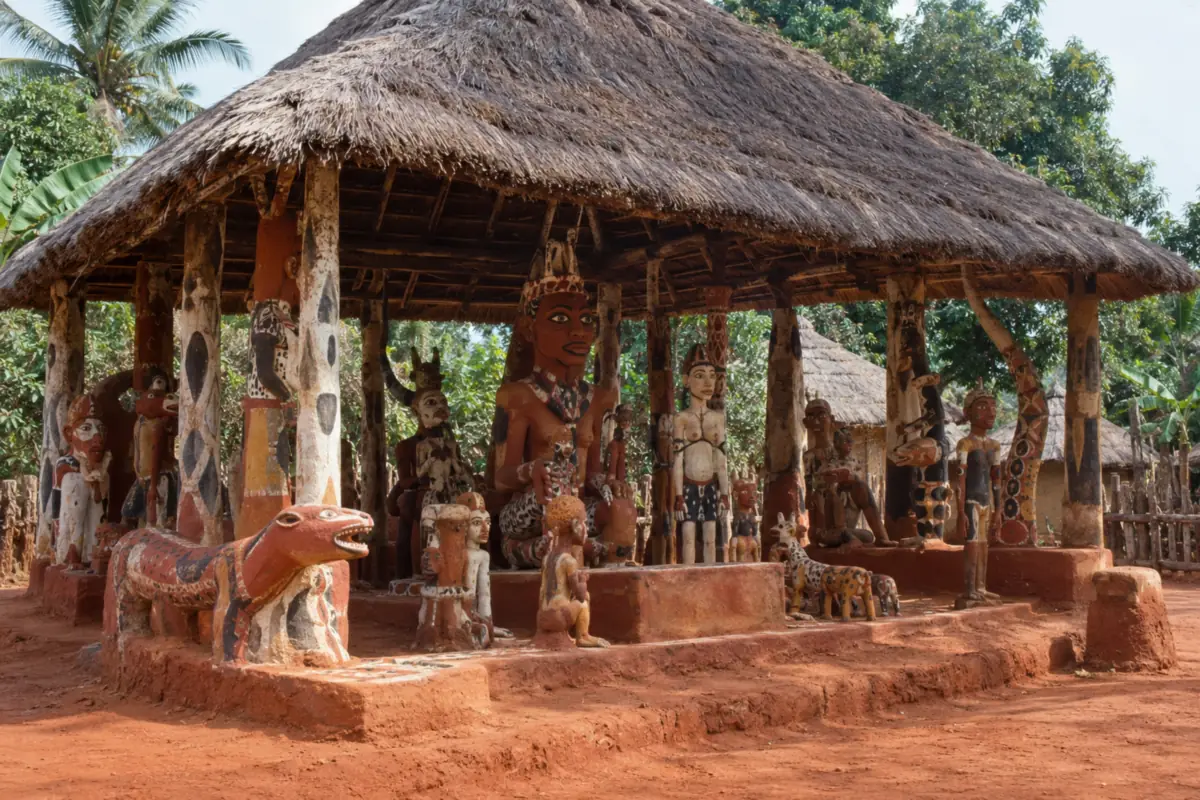
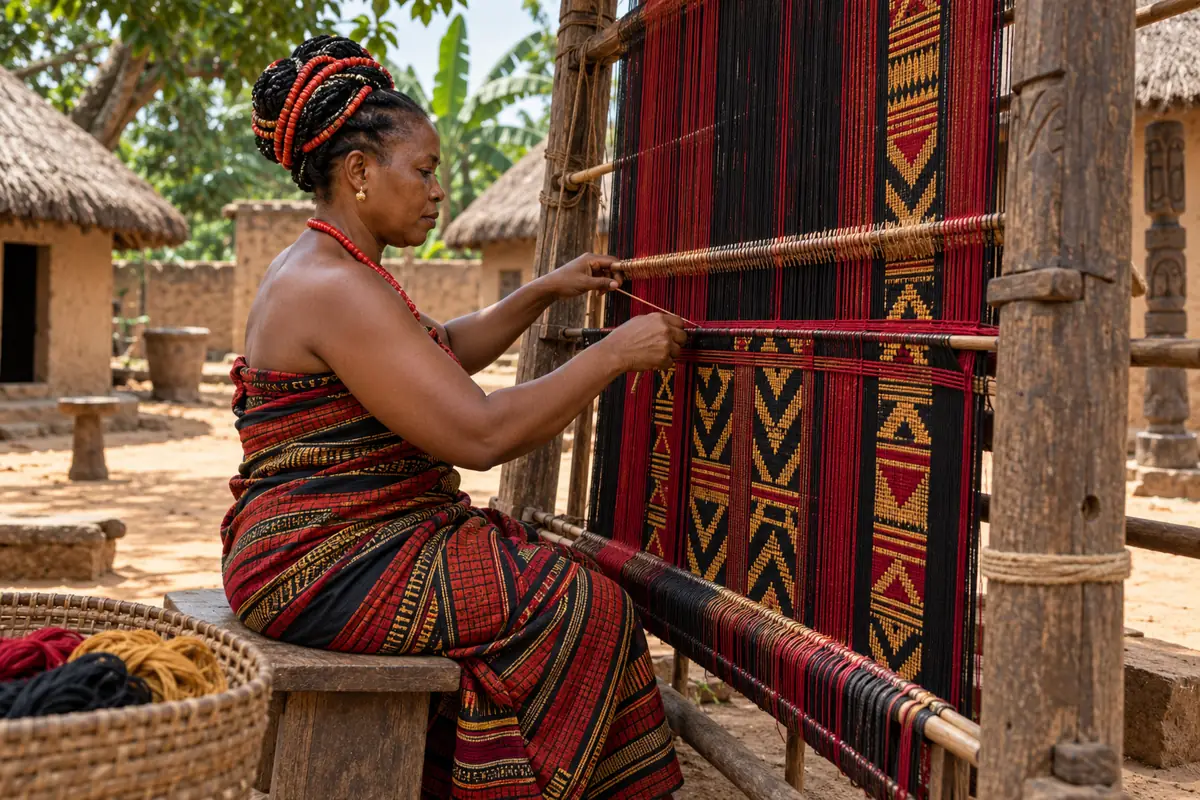
Image: Generated illustration — AI-generated for Naija Tales, reviewed for accuracy, Generated illustration, not a historical photo
Tradition says a woman named Dada Nwakata dreamed her patterns and wove them in secret. The cloth she is credited with became royal dress in the Delta.
Akwete is a town in Ukwa East, in the far south of Abia State. Its people are the Ndoki, and its name has become the name of a cloth. Say "Akwete" to a Nigerian of a certain age and many will think first not of the town but of the thick, patterned fabric woven there by women.
To understand why this cloth matters, look at where Akwete sits. It is on the edge of Igboland, close to the Niger Delta. For centuries the Ijaw city-states of the Delta, places like Bonny (Ibani), Okrika and Kalabari, were trading partners of the Ndoki. The Ijaw merchants did not only buy Akwete cloth. They ordered it. They commissioned particular patterns and particular colours. Some of them even kept homes in Akwete, staying long enough to watch their orders made. So this was not a village craft sold at a local market. It was a luxury good made to the taste of powerful foreign customers.
The weavers worked with whatever fibre suited the job. Rough raffia made costumes for masquerades and, in older times, headgear for warriors. Hemp was woven into towels, rope and bags. And soft, bright, spun cotton became the cloth people wore every day, and on the days that mattered most.
Every craft likes an origin story, and Akwete has a beautiful one. Local tradition credits the cloth to a woman named Dada Nwakata, who is said to have lived around the 1850s. The story says that she received her designs in dreams. She wove in secret, so that nobody could steal what she had seen. And she brought in new ideas, working with imported yarn and silk that other weavers were not yet using.
I want to be clear about what kind of story this is. It is tradition, handed down in Akwete, and it is a precious one. But the historians are not sure the craft starts with her. There is firm evidence of the cloth from the mid-nineteenth century, which fits the time she is said to have lived. Yet many researchers believe weaving here is a good deal older, because a craft does not reach that level of fineness overnight. Early European visitors to the region were already praising the cloth they saw. Some writers have even linked its beginnings to the first period of Portuguese contact on the coast, centuries earlier. So perhaps the fairest way to hold it is this. Dada Nwakata may not have invented Akwete weaving, but she is remembered as the woman who made it new, and the town has chosen her as its mother.
The patterns themselves carry stories. The most famous is the tortoise, called Ikaki, which means turtle in the Ijaw language. One kind of Ikaki cloth traces back to Aso Olona, a fabric from the Ijebu in Yorubaland. The Ijaw imported it, renamed it Ikaki and made it official royal dress. Then, in the nineteenth century, the women of Akwete took over making it, adding their own details to the old designs. There are other explanations, too. The tortoise, mbe, is the clever hero of countless Igbo folk tales, so it was a natural figure for an Igbo weaver to love. Besides the tortoise, the weavers use a cross, a draughts board, a sleeping mat, the fruit of the oil bean tree, called ukpaka, cooking utensils, animals, a saw, and a shape people call the bow tie or wine glass.
For a long time weaving was something women did alongside farming and trading. Then the world around Akwete changed. When slavery was outlawed and the palm oil and kernel trade declined, the cloth became the town's main trade. What had been part-time work turned into a full-time occupation, and a tradition women passed to their daughters.
European trade changed the cloth as well as the market. Weavers gained access to imported materials and new methods. By the later nineteenth century most of them were using imported cotton, and they found tricks to work faster, such as sewing two or three woven strips together into one larger piece. They took up the European standard length of two yards. Many loved the sheen of imported silk and worked it into their cloth. Some copied foreign patterns, and others invented new designs inspired by them.
That habit of borrowing is part of the cloth's character, not a weakness. Akwete took in an Ijebu fabric, an Ijaw name, European cotton and silk, and its own folk heroes, and turned them all into something unmistakably Ndoki. And it is still going. Women in Akwete keep weaving today, selling to buyers far beyond the Delta and beyond Nigeria. Somewhere in every piece, if you believe the tradition, is a dream that came to a woman at night more than a hundred and fifty years ago.