Place name · c. 900 CE to 1450 CE (tradition) · Legend
No matching image yet, so this page uses a plain title card instead of a photo.
A Kamwe prince loved hunting so much that he kept slipping away down the hills. His father kept asking where he was, and the answer became the name of a town.
The Mandara Mountains run along Nigeria's border with Cameroon in the far north-east, a jumble of granite peaks, terraced slopes and narrow valleys. On their middle slopes live the Kamwe people. Outsiders long called them Higi, a name the Kamwe dislike. Their elders say it came from the Margi and mocked Kamwe women and children for their love of eating grasshoppers. Kamwe, they say, means people of the same blood. Their language is Vecemwe, and their biggest town, the fourth largest in Adamawa State, is Michika, which they pronounce Mwecika.
The Kamwe keep a long royal family tree, and like most such trees its oldest branches are tradition rather than record. The historian Joseph Kwaji, drawing on the Kamwe writer I. Y. Kwache and on oral sources, sets it out like this. The founding ancestor was Gelmai, who is said to have left the east, from Ethiopia, around 900 CE. He settled at a place called Mchekili, thought to be in the heart of the Mandara Mountains, and became the first Mbege, or chief, of the Kamwe.
Around 1200, the story goes, his three sons left Mchekili and spread out. Tizhe went to Sukur, the hill kingdom now famous as a UNESCO World Heritage Site. Zira went to Sina. Tumba went to Ghye, which is also called Zah. Those three moves, Kwaji writes, form the core of the Kamwe royal family, and they help explain why the Kamwe and the people of Sukur still share clan names such as Zira, Kwaji and Yana.
Tumba had several children. One of them, Natawa, moved with his brothers and sisters to a place called Nkafamiya around 1300 and became its first Mbege. His family became known as the Ka Mbege of Nkafamiya. Natawa in turn had five children, named in the tradition as Watsine, Milesha, Vwataghi, Ghwalya and Kwada. It is the youngest name on that list that matters for our story. Kwada, the tradition says, was a very good hunter.
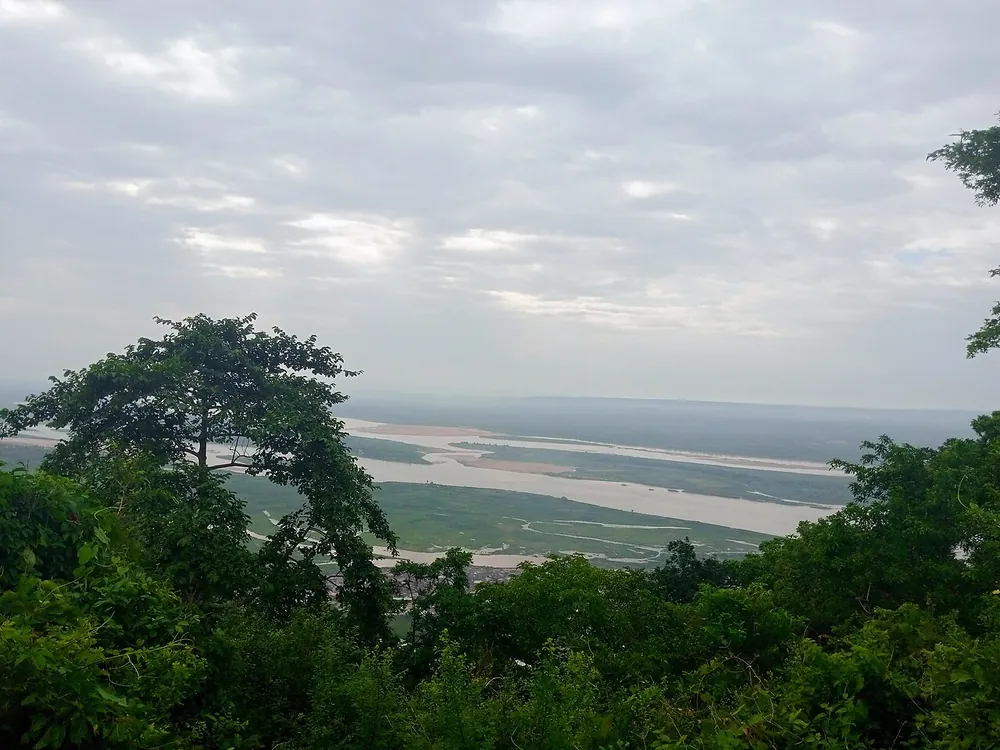
Below Nkafamiya the mountain slopes fall away towards open lowland, where Michika town and its surroundings now sit. In Kwada's day, according to the Kamwe, this was empty country and a fine hunting ground, and Kwada loved it. He was so good at hunting that people gave him a title, Dlankengye, which means an expert, professional hunter.
He also had a habit. He would leave home quietly, without telling anyone, go down the slope to hunt, and stay away longer than he was supposed to. You can imagine the scene in his father's compound. Natawa looks around and asks where Kwada is. Someone shrugs and says he has gone down the hills to hunt. The next time, the same question, and the same answer. In Vecemwe the reply was something like "Kwada li dzigwa ka njaa cika tli."
Over time, the tradition says, people started calling the place itself by that habit. Kwaji gives the full phrase as "Mwe che ci ka ra Kwada Kwakaa," which Kamwe elders translate as the hills where Kwada Kwakaa goes secretly, or stealthily, to hunt. It was shortened to Mwe che ci ka, and then to Mwecika, which outsiders wrote as Michika. Wikipedia gives a shorter gloss of the same root: "Mwe-che ci-ka," creeping in silently. So the name of a town, and of a whole local government area with an estimated 239,000 people, may come from a father's mild annoyance at a son who would not stay home.
Kwada Kwakaa, the tradition goes on, became the founder and first Mbege of Michika. Kwaji dates that to about 1450, and Wikipedia says the late fifteenth century. Neither date comes from a written record of the time, so it is best to treat both as the elders' reckoning. There is also a rival version. Some say the first person to creep into the empty lowland was a man named Tangla, from a clan of smiths. Kwaji notes that this version is disputed, partly because Tangla has no clear link to the royal line, and that most accounts give the honour to Kwada.
Whatever its exact birthday, Michika grew into a real power in the hills. Kwaji cites the colonial historian Anthony Kirk-Greene, who described the Yedseram valley before the Fulani jihad as a set of independent hill states, each built around a mountain whose plateau and water made a safe refuge from slave raids, whether by Borno, Mandara or Fulani cavalry. The Kamwe chief ran his state with a council of advisers, each with a speciality: water, youth, grain, spirits, forests and land, hunters, rain and blacksmiths.
Iron mattered a great deal. The Kamwe and Sukur shared a special class of smiths, called Lighyei among the Kamwe and Llidi at Sukur. They made iron bars and blades for farming tools and weapons. Those iron bars were also paid as bride price in Kamweland until the second half of the twentieth century. In return the Kamwe traded a fast-ripening sorghum, natron and other goods with Borno, which had little iron of its own. Kwaji says a town called Mishiga appears in the records of Mai Idris Alooma's Borno in the sixteenth century, and that the German explorer Heinrich Barth wrote of a place he called Mechika and of the fierce reputation of its people.
From the nineteenth century the story darkens. Fulani lords linked to Yola rose in the region, and under British indirect rule the Kamwe chief was reduced, by Kwaji's account, to the rank of a district head in 1903. Kwaji, writing as a Kamwe historian, argues that the old line was pushed aside for a family of Fulani origin, and his paper is openly a case for the Kamwe side. In 2025, he reports, the Adamawa government restored a Michika chiefdom with twelve districts and placed it under Professor Bulus Luka Gadiga as a second-class chief. The Mbege's line, in other words, has come back. And every time someone says the town's name, they are still repeating the excuse made for a young hunter who had gone down the hills again.