Legend · Oyo Empire era (tradition) to present · Mixed
No matching image yet, so this page uses a plain title card instead of a photo.
High on a hill above Ado-Awaye sits a small dark-green lake that is said never to dry. Its name, people say, is the cry of a childless woman who walked into the water and never came out.
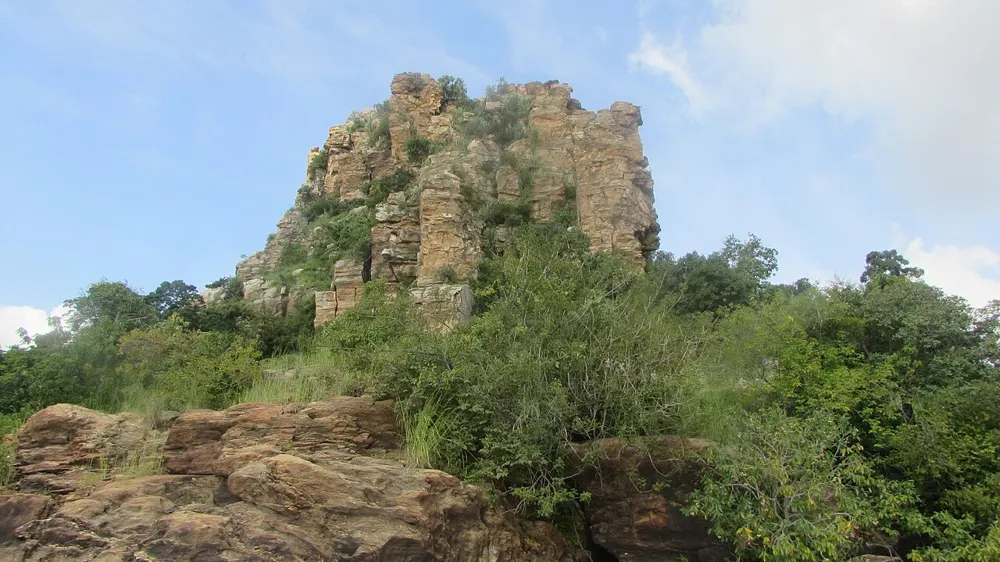
Ado-Awaye is a small, busy town in Iseyin Local Government Area of Oyo State, ringed by hills and thick green bush. Above it rises a hill called Oke Ado, and on top of that hill, where you would expect only bare rock, there is a lake. It is not big. It covers about 350 square metres and it is oval, with still, dark green water. Rain running off the rock is what fills it. Mud turtles live in it.
What makes people talk is not its size but where it sits and how it behaves. Nigerians often call it the only suspended lake in Africa, and it is said to be one of only two in the world, the other being Hanging Lake in Colorado in the United States. Those are proud claims, repeated often, and it is fair to treat them as claims. The local king, the Alado of Ado-Awaye, Oba Ademola Olugbile Folakanmi, Makuledoye II, put his own twist on it when he spoke to Vanguard in 2019. Iyake, he said, is natural, while the American one is man-made.
People also say the lake never dries, even in the dry season, and that its level does not rise in the rains either. Nobody can tell you how deep it is. The tour guide who led a Vanguard group up the hill said it is bottomless, and that nobody is allowed to swim in it or even step in. Some of that rule is about respect, and some of it is plain good sense: water of unknown depth on a rocky hilltop is no place to play.
According to the Alado, the lake was found around the year 1500 by a group of refugees, whom he called the Dihormy people. Their descendants, he said, now lead the kingmakers who choose the Alado. So the people who first came upon the water still hold a key role in the town.
The lake's name comes with a sad story. In the local account, Iyake comes from the Yoruba Ìyáké, which people translate as "woman's cry". It goes back, they say, to the days of the Oyo Empire, when a woman from Ota, a town in what is now Ogun State, came to live in this place. She had no children. People laughed at her and mocked her for it. In the end, the story says, she walked into this lake and drowned herself, and her voice still echoes in the water today.
The Alado told the same tale in a slightly different shape. One of the myths, he said, is that Iyake was a barren woman who turned into water. Either way, the lake is her. And because of her, the lake is believed to have the power to help women who long for children. The Alado added another belief: that a person with spiritual problems can consult the lake and find answers.
There is a darker piece of folklore close by. Near the lake is a hole called Agbómofúnyàké, which means "takes a child and gives it to Iyake". People say that when it is full of water, anyone who puts a foot into it never comes back. It is hard not to notice how the name answers the woman's story. She lost the children she never had, and now the hill is said to take children for her.
Local people treat the lake as sacred, a doorway to other worlds. Traditional worshippers still hold yearly rites there, and the town celebrates an Oodua festival on the hill every year. The Alado described the mountain as a centre of unity for everyone in the town.
The lake is the star, but the climb up Oke Ado has other wonders, each with its own belief. The first thing a hiker meets is Ishage, a rock on the edge of the mountain that people regard as the bringer of rain. It is worshipped as a god.
All over the hill there are marks people call Esè Àwon Àgbà, the footprints of the elders, giant prints believed to belong to the ancestors who once lived on the mountain. Further on is the Elephant Tree, a tree that fell long ago and settled into a shape that looks just like an elephant. Visitors are allowed to climb on it and take pictures.
Then there is Ese Kan Iku, the path of death, which runs a long way along the top of the mountain. Anyone brave enough to reach it is invited to carve their name on the rock as a reward for their courage.
In recent years more and more people have come to see all this, drawn by photos and posts online. The Oyo State government started an Iyake International Festival to celebrate the lake and the town's other cultural treasures, and has talked about roads and facilities to bring in tourists and investors. In 2019 the Alado was still waiting. Plans had been made for the mountain, he said, and lawmakers from both the state and federal levels had come to look, but he had not yet seen the results.
So the lake waits too, small and still on its hill, never quite full and never quite empty, holding the name of a woman nobody remembers except by her cry.