Legend · 16th century to today · Mixed
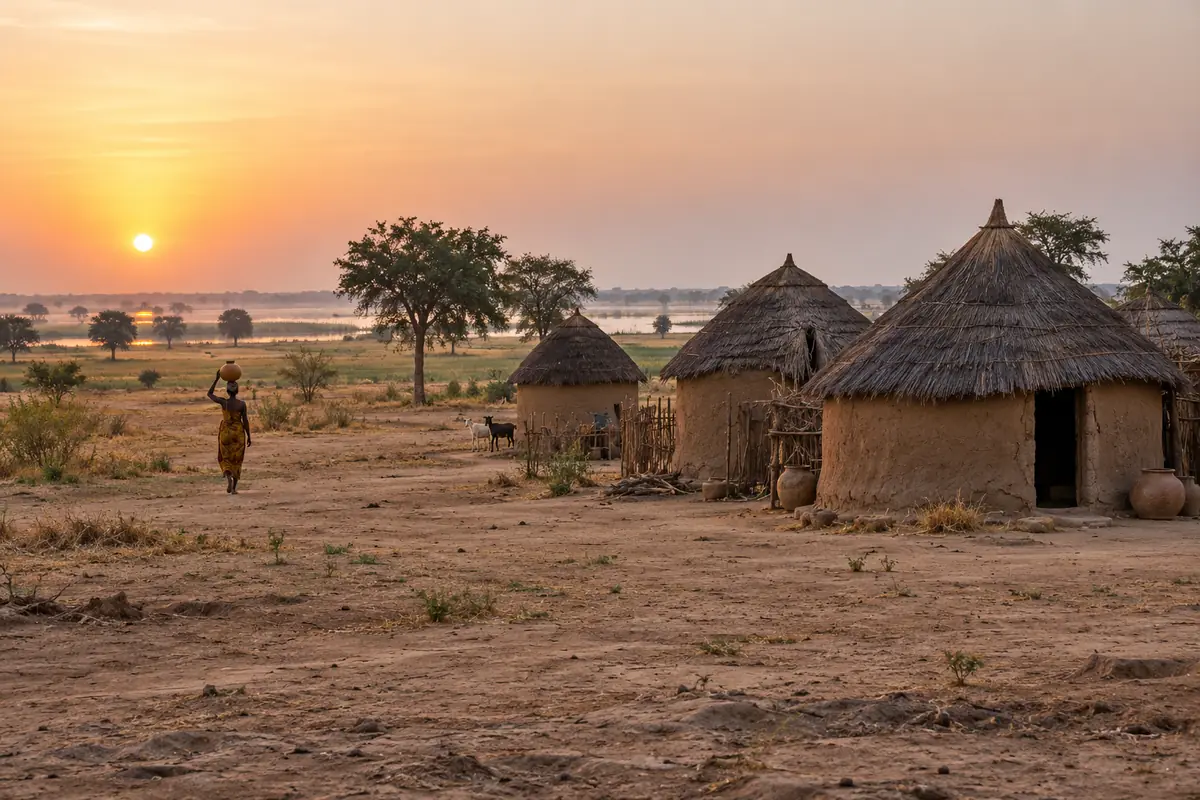
Image: Generated illustration — AI-generated for Naija Tales, reviewed for accuracy, Generated illustration, not a historical photo
The Kanuri called them Gamergu. One linguist thinks the word is a twisted form of the Kanuri for 'first settler', a quiet admission hidden inside a name.
Most people who know Borno know the Kanuri. Far fewer have heard of the Malgwa, a people who live mainly in Damboa, Gwoza, Konduga, Dikwa and Bama. For centuries the Kanuri had their own word for them: Gamergu. On the surface it is just a label one group gave another. But the German linguist Doris Löhr, who studied the Malgwa in Maiduguri, noticed something odd about it.
Löhr argues that Gamergu is a spoonerism, a word with its sounds swapped around, of the Kanuri word ngawarwú. And ngawarwú means 'first settler'.
Think about what that means. The powerful newcomers named the people they met with a word that, underneath, said these were the ones who were here before us. Whether anyone meant it that way, the name carries the memory anyway. It is a small linguistic fossil, and it points to a history that the bigger story of Borno tends to swallow.
We should be careful here. This is one scholar's reading of the word. I could not find a second expert who confirms it, so treat the meaning as a strong suggestion rather than a settled fact. The rest of the Malgwa story, though, rests on a long line of historians.
The Malgwa speak a language very close to Mandara, the language of the Wandala people across the border area. Both belong to the Central Chadic family. Löhr cites about 20,000 speakers in Nigeria. That is not many, and it is part of why their history has been so easy to overlook. A small people with a big neighbour often end up appearing in the records only when that neighbour goes to war with them.
That is exactly how the Malgwa enter written history. They first show up during the reign of Mai Idris Alooma, the famous ruler of Kanem-Bornu who reigned from around 1569 or 1570 to about 1600. Löhr quotes the researcher Seidensticker saying that Idris Alooma "had been involved in fighting the Gamergu".
The historian Barkindo, also quoted by Löhr, adds detail. He writes that Idris Alooma kept "dissident groups such as the Gamaghu" in check with a series of ribats, frontier fortresses. So from the very first time their name is written down, the Malgwa are on the wrong side of a fortified line, people to be watched and held back.
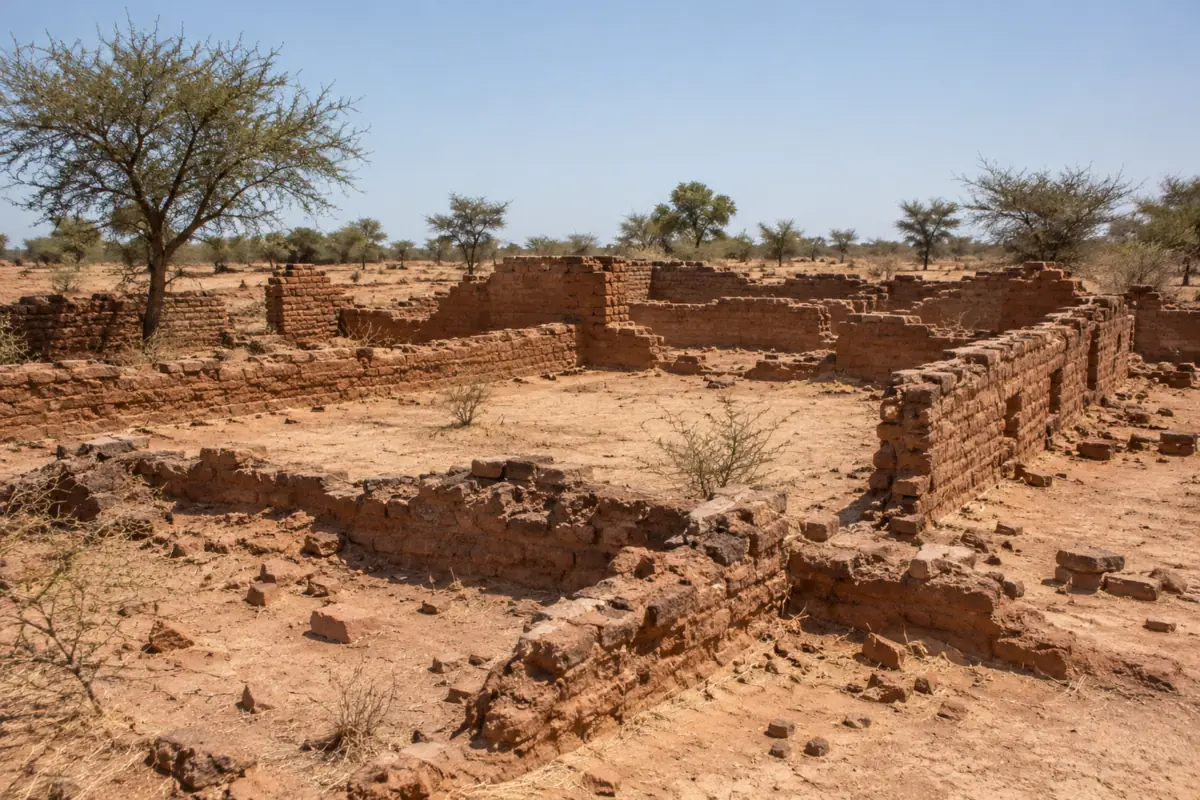
There is an older layer too. According to tradition recorded by Barkindo, the Wandala community, close kin of the Malgwa, first came together at Ishga-Kewe, about 20 kilometres north of Bama on the River Yedseram. And the Gamergu once had a capital, or at least a major town, at a place called Muna. Seidensticker places it about 10 kilometres north-east of present-day Maiduguri.
Muna was abandoned in the early nineteenth century. That matters, because Yerwa, the town that grew into Maiduguri, was only founded in 1907. In other words, the Malgwa had a significant town in the area long before the city that now dominates Borno even existed.
Löhr describes their history under Kanuri rule in hard words: constant war, suppression and slave raids. She writes that many Malgwa "had to hide their identity, were driven away or enslaved". When your name is dangerous to carry, you stop saying it out loud. Over generations, that is how a people slowly disappears from view, not all at once, but family by family.
And yet they did not vanish. When Löhr did her research, she met people who still held on to the old geography. In 2001 a 91-year-old man, Baba Isa of Mandarari, could still name Malgwa places inside and outside Maiduguri. Imagine walking through a busy modern city with him and having him point out that this corner, and that one, were once Malgwa ground. The city has grown over those places, but in his memory they were still there.
Others have chosen to organise rather than hide. In Maiduguri there is a Malgwa cultural club, the Hɘgya Social Club, registered in 1988. Löhr reports that it has about 1,000 members. For a people with only around 20,000 speakers in the country, that is a striking number, a sign that a lot of Malgwa want their identity to be seen again, not just remembered privately.
That mix is what makes the Malgwa story worth telling. It is not a tale of a lost people found in ruins. It is a story of people who were pushed to the edges of someone else's kingdom for four centuries, who lost a town, who sometimes had to deny who they were, and who are still living in the same region today, keeping their language and setting up clubs to protect it.
So the next time you hear the word Gamergu, it is worth remembering what Löhr thinks may be buried inside it. A name given by outsiders, possibly meaning the people who were here first. If she is right, the Kanuri word quietly kept a truth that the history books were slow to write down.