Place name · 1400s · Disputed
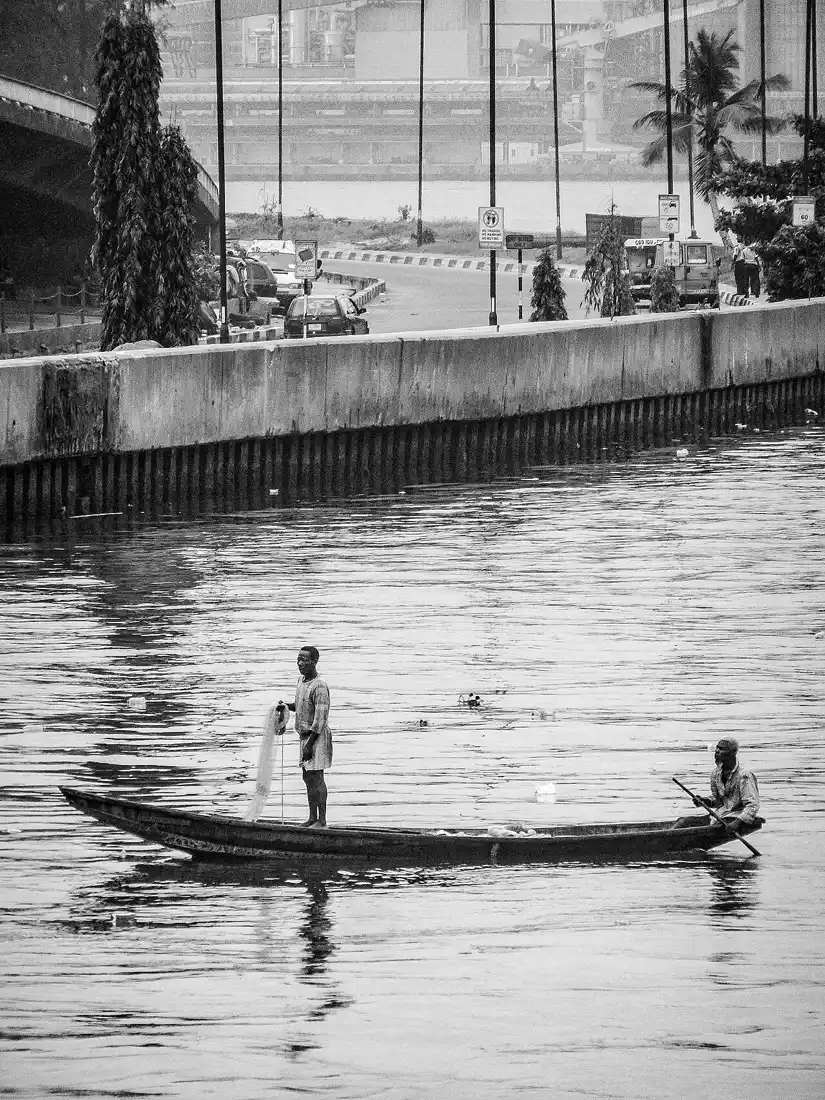
Image: Fishermen making an early morning catch at the Marina section of the Lagos Lagoon. .jpg — Pius-Imue Favour, CC BY-SA 4.0 · source
One name came by ship from Portugal. The other is older, and nobody fully agrees what it means.
Long before there was a big city here, there were only fishermen. They paddled across the lagoon to fish, traded, and paddled home again. The land was mostly swamp and creek, with islands of sand and mangrove in between.
Then, by the 1400s, the Awori came. They were a branch of the Yoruba, moving down the Ogun River to get away from wars further inland. Their first home was at Isheri, on the riverbank north of the lagoon. Over time, as trade on the water grew, they moved closer to the sea. First they went to Ebute Metta on the mainland. Then they moved across to the small island of Iddo, which was easier to defend. But Iddo was tiny, too small to feed everyone. So the people began to cross the water to a bigger island just to the south, and farm it.
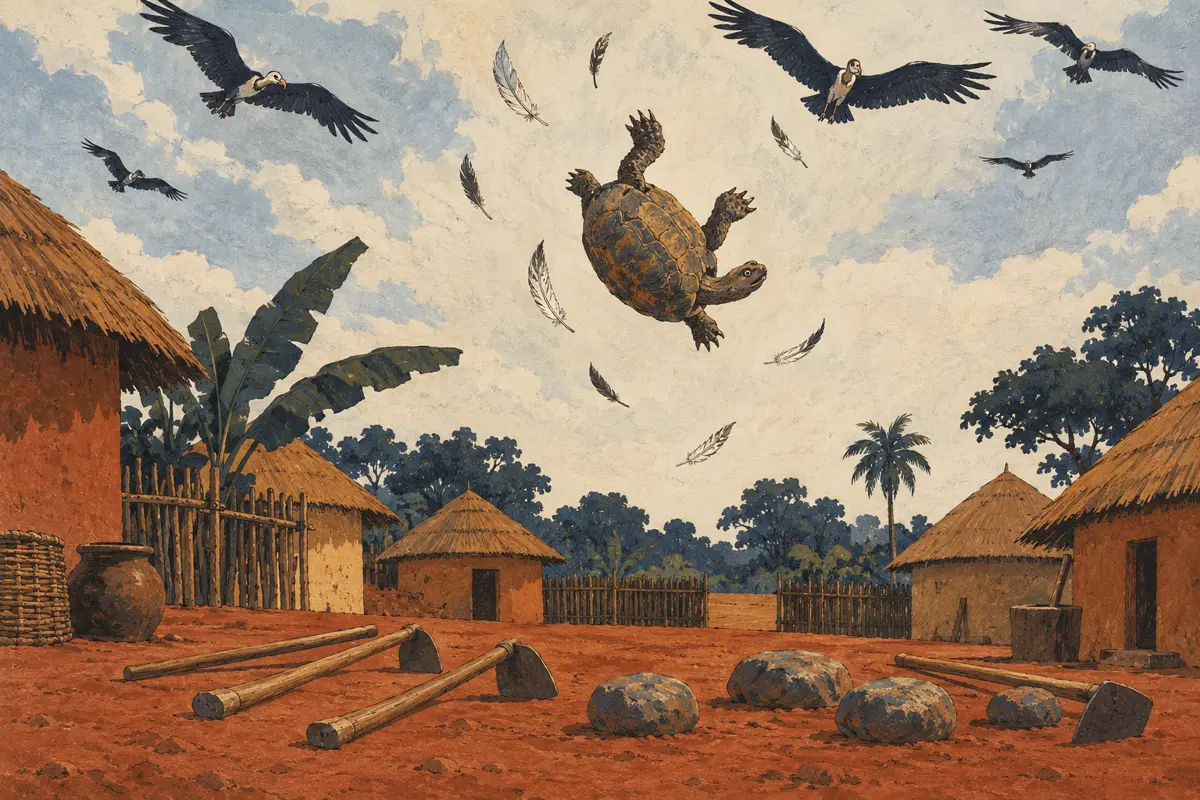
That island is what we now call Lagos Island. Its first name, the story goes, was Oko, a Yoruba word for a farm. It was farmland belonging to the people of Iddo, and they answered to their chief, the Olofin. One of the Olofin's sons, Aromire, chose the highest spot on the island, at its north-west corner, and planted red pepper there.
That pepper farm never really went away. A palace was built on the very spot, and it still stands there today. It is the home of the Oba of Lagos, and it is called Iga Idunganran, the palace on the pepper farm. Around it grew the first real neighbourhood on the island. People called it Isale Eko, which means lower Eko or the bottom of Eko. To this day Isale Eko is the old heart of Lagos Island, proud of being where the city began.
Even this first chapter has an argument in it. Some say the name Eko grew out of Oko, the farm. Others link it to Ereko, another Yoruba word, for a farmstead or small hamlet. And a third group says Eko is not Yoruba at all, which brings us to the second part of the story.
Around the year 1600, the powerful Kingdom of Benin, to the east, was reaching west along the coast for trade. A quarrel broke out on Iddo. The general history books describe it as a fight between the local Awori and the Benin and other foreign merchants trading there. The people of Isale Eko tell it more personally. They say a rich woman named Aina felt the Olofin's men had treated her badly in a case, and she asked the Oba of Benin to look into it. His messengers came by canoe, saw fishing gear piled on the shore, mistook it for weapons, and went home to report that Iddo was preparing for war.
Either way, Benin attacked. Its first army was beaten back by the Olofin and his people. What happened next depends on who is telling it. Benin tradition says its armies won in the end. The Awori say it was more of a draw that ended in an agreement. What is clear is that Benin soldiers set up a war camp on the island. In the Edo language of Benin, the word for a war camp is Eko. Lagosians have used that name ever since.
Benin's commander, Asheru, was later killed in a fight near Isheri. An Awori chief named Ashipa carried his body back to Benin City, and the Oba of Benin was so pleased that he made Ashipa ruler of Eko. He sent him home with a sword and a royal drum as signs of his power. Here too the traditions part ways. In Lagos, Ashipa is remembered as an Awori man. In Benin, he is remembered as a son or grandson of the Benin king himself. Every Oba of Lagos since then traces his line back to Ashipa.
For more than two hundred years, Eko sent tribute to Benin, and the Oba of Benin had the right to confirm each new Oba of Lagos. The kings of Eko stayed Yoruba, but their crown carried Benin's blessing. By the 1700s that tie was mostly for show, and around 1830, Lagos simply stopped paying.
The name Lagos came from the sea. Around 1472 a Portuguese sailor, Rui de Sequeira, sailed into the lagoon and called it Lago de Curamo. In Portuguese, lagos means lakes, and the lagoons around the island must have looked like a chain of lakes to sailors coming in from the ocean. Some writers think the name was borrowed instead from Lagos, a port town in the south of Portugal. Nobody has settled it.
For a long time, though, Europeans used other names. In old European records the area was Curamo, and later it was Onim. One historian thinks Onim was simply the Europeans' way of saying Awori, the name of the people who lived there. Trade with Europeans began to boom in the 1760s, when Oba Akinsemoyin invited Portuguese traders to settle on the island. The Isale Eko union's own history dates that invitation much earlier, to 1704. The Portuguese gave the Oba roof tiles from Portugal for his palace. But the trade that made Eko rich was mostly a trade in human beings. Eko became one of the busiest slave ports on the whole coast.
In the 1800s Britain, which had now turned against the slave trade, got involved. In 1845 a prince named Kosoko drove his uncle, Oba Akitoye, off the throne. Akitoye asked the British for help and promised to end the slave trade if they helped him get his throne back. In late December 1851, British warships attacked. Kosoko's men fought hard for days, but the guns on the ships were too strong, and he fled to Epe. Lagosians remember those days as Ogun Ahoyaya, the boiling battle. Akitoye was put back on the throne and signed a treaty with Britain on the first of January 1852, promising to end the slave trade.
Ten years later Britain came back for the whole island. In 1861 the next Oba, Dosunmu, was called to a British warship and told to hand Lagos over. He refused at first, but when the British threatened to bomb the town, he signed. From then on Lagos was a British colony, and the name the sailors had given it became the official one.
Yet the older name never left. Ask anyone in the city, and they will tell you they are going to Eko. When Lagosians want to say their city will survive anything, they still say it the old way: Eko o ni baje. Lagos will not spoil.