People · 1877 to 1955
Image: Generated illustration — AI-generated for Naija Tales, reviewed for accuracy, Generated illustration, not a historical photo
Before he was one of the richest men in West Africa, Aliko Dangote's great-grandfather was a fatherless boy who walked to the Gold Coast to find his mother, and was sent to beg as an almajiri.
Today the name Dantata is tied to money. Aliko Dangote, Africa's richest man, is his great-grandson. But the boy the family is named after started with very little, and the name itself comes from a woman who was never rich at all.
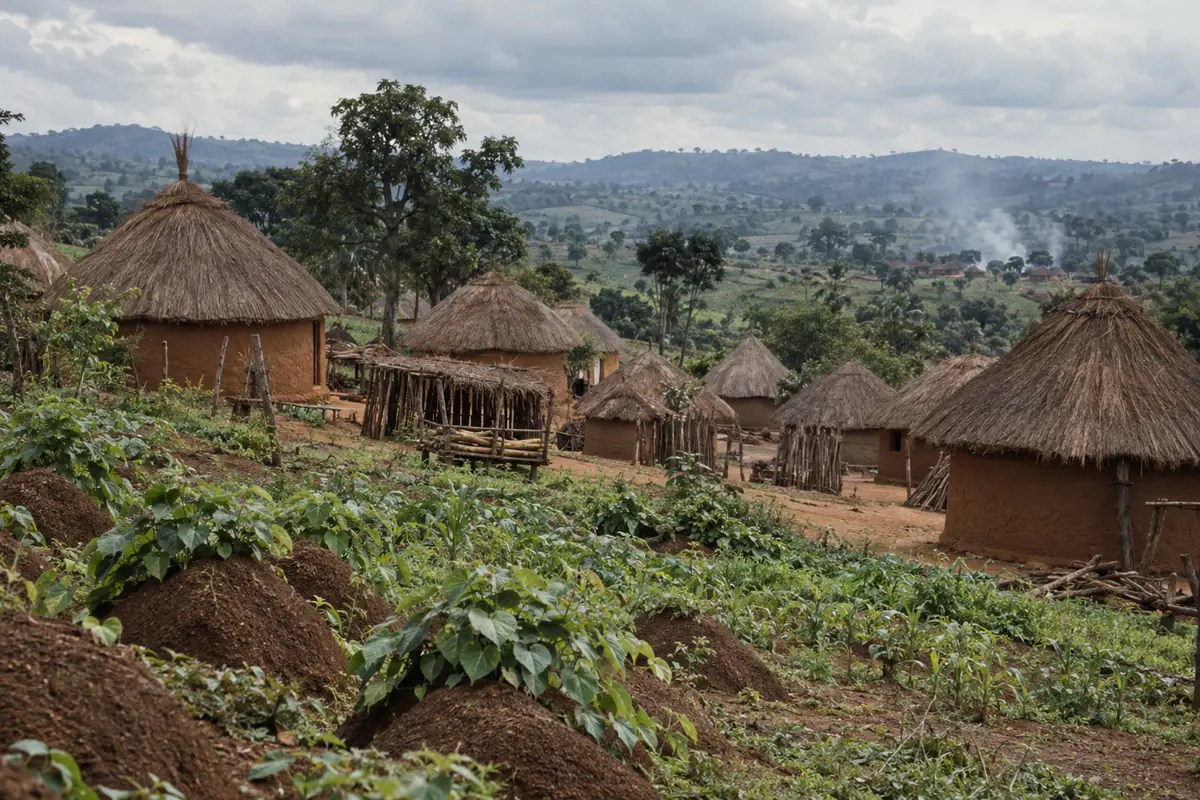
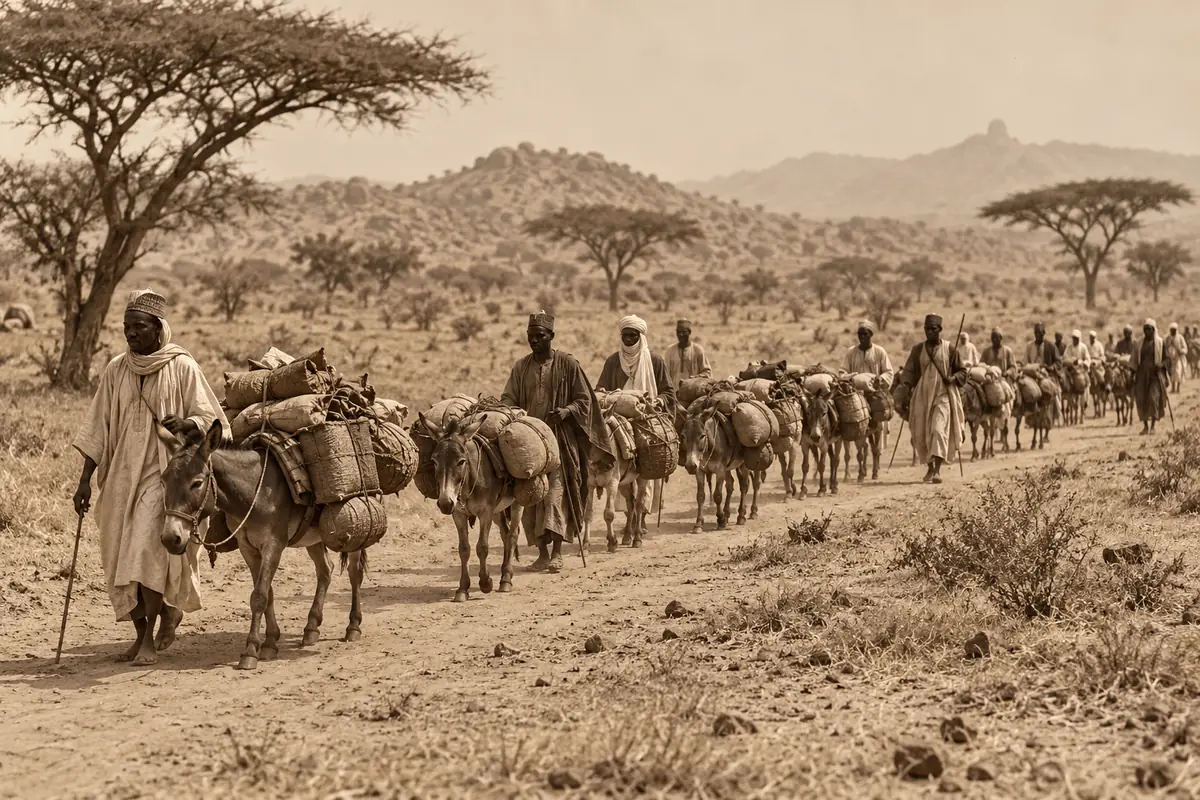
Alhassan was born in 1877 in Bebeji, a market and fortress town south of Kano. His parents were both caravan leaders of Agalawa origin. The Agalawa were long-distance traders who had once been the slaves of Tuareg nobles. His father, Abdullahi, traded textiles, cattle and slaves for kola nuts from the forests of what is now Ghana, and he did well. But he probably died in 1885, when Alhassan was still small.
His mother was a serious trader too, described as "a trader of no small consequence". After her husband died, she did not remarry, and she eventually moved to Accra on the Gold Coast, then a major trading centre. She left her children behind in the care of an old slave woman named Tata.
That is where the name comes from. Tata raised him, so people called him ɗan Tata, Tata's son. It stuck for life, and it is the name his descendants still carry. Tata also taught him to save. She bought him an asusu, a small clay money box, and encouraged him to put money away. The family still has that box today.
He had lost much of what his father left him, so he worked to support himself while going to Qur'anic school. The boy who would one day deposit silver coins by the camel-load was, at this point, putting coins into a clay pot.
At about fifteen, Alhassan joined a caravan heading for Gonja, on the way to his mother in Accra. His hope, according to the historian Abdulkarim Dan Asabe, was simple. His mother was wealthy, and he wanted to lean on her money instead of struggling on his own.
It did not turn out that way. A day after he arrived, she took him to a mallam, an Islamic teacher, and told him to stay there until he was ready to go back to Kano. So he became an almajiri. After his lessons he had to beg for food to feed himself and his teacher. On Thursdays and Fridays he did paid work, and he handed a big part of what he earned to the mallam.
Then came war at home. From 1893 to 1895 Kano was torn by a civil war, the Basasa, between two men who both claimed the throne, Tukur and Yusufu. The Agalawa backed Tukur, so towns with big Agalawa communities, Bebeji among them, were looted by Yusufu's side. Alhassan was in Bebeji when it broke out. He and his brothers Bala and Sidi were captured and sold into slavery.
Nobody is sure what happened next. Dan Asabe records four versions. In one, he was taken to Garko and freed himself after the war. In another, he bought his own and Sidi's freedom straight away. In a third, he escaped and later, in 1925, paid to free Bala. In the fourth, he escaped soon after being caught and went back to his mother in Accra. Whatever the truth, he came through it. In 1914, by order of the Emir's judicial council, he won back his father's seized house in Bebeji.
When the British invaded Kano in 1903, Dantata waited in Bebeji until the roads were safe, then headed for the Gold Coast again. This time he went through Ibadan and Lagos and reached Accra by sea. He started using that route to carry kola nuts to Lagos, where he sold them on to traders going north. He was one of the first northern traders to use the coast that way.
After his mother died in 1908 he focused on Kano and Lagos and set up house in Kano's Sarari ward, which was mostly empty then. As groundnut farming grew, the Niger Company came looking for big buyers. By 1918 Dantata had a large network of agents buying groundnuts. His coastal experience and basic English gave him an edge, and his frugal habits let him build capital fast. By 1922 he was the company's largest supplier and one of the richest men in Kano.
In 1929, when the Bank of British West Africa opened in Kano, he deposited twenty camel-loads of silver coins, the first Kano businessman to use a bank. In 1927 he paid for 16 people to go on pilgrimage to Mecca. One of them was the mallam he had begged for in Accra.
He died in his sleep on 17 August 1955. His safe held two chequebooks with less than £30 between them. He had kept almost no records, and officials who went looking found about £350,000 in Northern Nigeria alone before they gave up. The boy with the clay money box had never stopped saving. He just stopped telling anyone where.