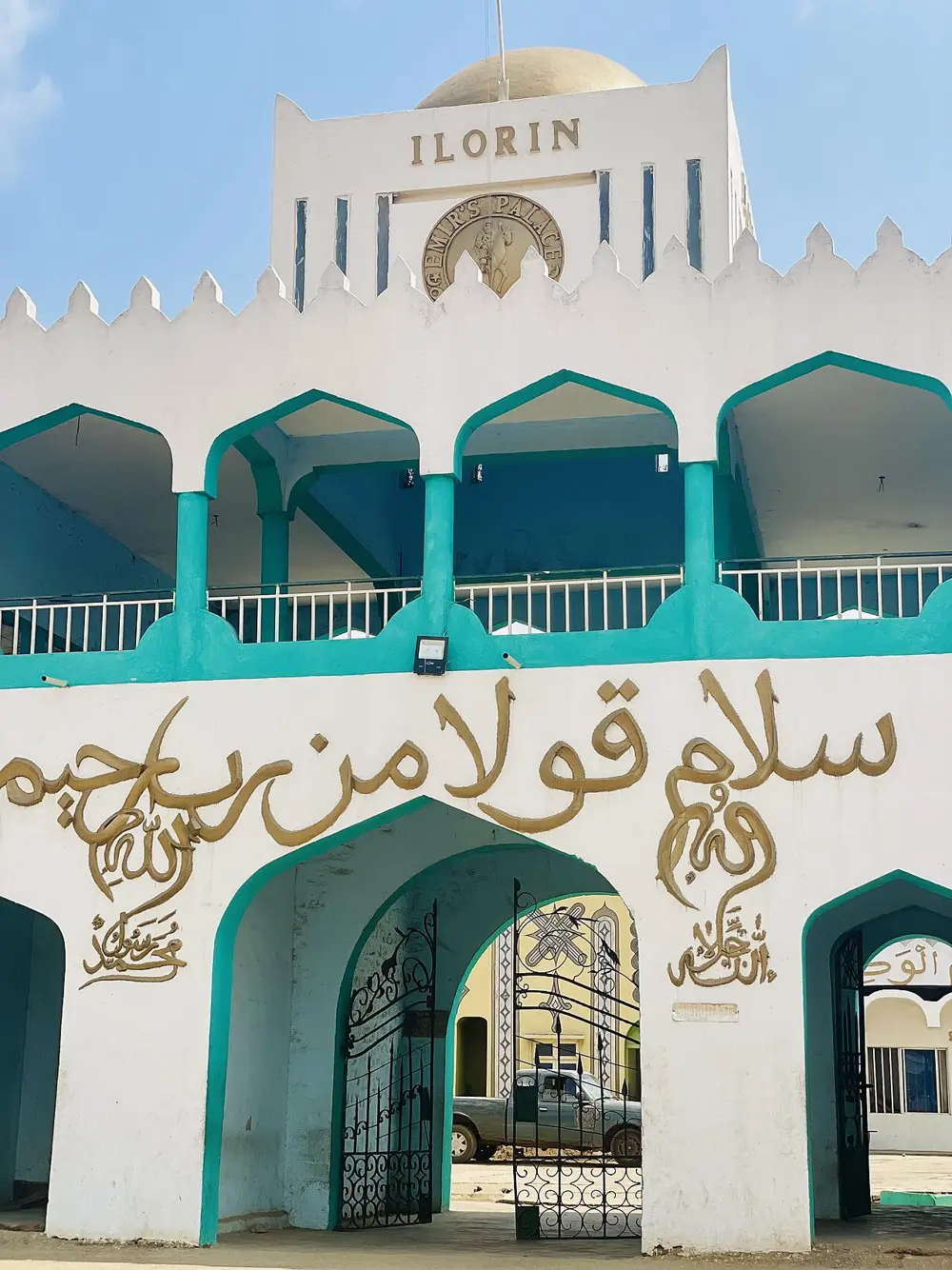
Place name · Early 1800s to late 1970s
Image: Suleja Landscape.jpg — YarimanBariki, CC BY-SA 4.0 · source
Before Abuja was Nigeria's capital, the name belonged to a walled town built by a light-skinned prince who had followed his brother into exile.
In 1804 the Fulani jihad reached Zaria, the old capital of the Hausa kingdom of Zazzau. The Daily Trust tells the moment like this. The king, Muhammadu Makau, had only been on the throne two years. He was out at the Eid prayer ground outside the city walls when the Fulani forces moved in, and by the time his men turned back, the gate was shut against them. They had no weapons with them. The king of Zazzau had lost his capital without a fight.
So he ran south-west, with the Fulani on his heels, through Kauru and Kajuru and other towns. Some chiefs took him in for a night, some turned him away. About three thousand people went with him, according to the town's own history, A Chronicle of Abuja, written down in 1952 by Alhaji Hassan and Mallam Shuaibu Na'ibi. They finally stopped at Zuba, a Koro town whose chief had long served the kings of Zazzau. From there Makau held off the Fulani and ruled what was left of his kingdom for about twenty years.
Among the people who followed him was a younger brother named Jatau. His own mother had died when he was a baby, and he was nursed and raised by Makau's mother, Tasalla, alongside Makau and another brother, Abu Kwaka. He grew up short, about five feet six, thickset, and so light-skinned that people called him Ja, the red. Abu Ja.
Makau's end came in 1825. A few years earlier he had taken the town of Jiwa after a long fight, and when the people there begged not to be sold, he spared them. His warriors were furious. Selling captives was how they paid for food and gear, and he had taken that from them. So when they marched on Lapai and victory was in sight, they turned and left him. The Chronicle says only a handful stayed, and one of them was Abu Ja. Makau told his brother to go back, gather the people, and take the throne. Then he was killed at the gates of Lapai.
Abu Ja was made king at Izom, among the Gwari, and stayed there three years. Then he wanted a capital of his own, further from Lapai and its Fulani. He crossed the river Tafa and found a spot at the foot of the hills, beside a little stream that ran into the river Iku, a few miles north of Zuba. There, in 1828, he put up the first rough hut. The next year the people began building the walls, and the town took his name. Abuja.
The Chronicle lists how the new town was laid out, with almost every big title-holder building a ward of his own: the queen mother's ward by the great gate, a ward for the horsemen, one for the scribes, one for the butchers, one for the mosque. The stream split the town in two, with the army commander's people on the east bank and the king and the other chiefs on the west.
It was a nervous place. Once the Fulani Emir of Zaria, Mamman Sani, came with an army and camped outside. Abu Ja slipped out at night and met him, and the two men talked. Mamman Sani said he had only come to fight pagans, not the people of Abuja, and soon he packed up and went home.
But the fear never left Abu Ja. He banned traders and strangers from the town and its surroundings. Any Fulani found nearby was killed on suspicion, and once a whole group of herders was killed and about three thousand of their cattle shared out. Among his symbols of office was a quiver of two hundred arrows tipped with poison, made for him every year by the people of Burum.
His last years were hard. In 1851 he sent men, his own sons among them, to help the people of Toto against the Emir of Nassarawa. Three of his sons were captured. Even Umaru Nagwamatse, a Sokoto prince fighting on Nassarawa's side, begged for their lives and threatened to walk away from the war. The emir killed them anyway. Abu Ja died not long after, in 1851.
Abuja outlasted him. The Emirs of Zaria tried again and again to take it back, the last time in 1893, and never did. The British were a different story. In 1902, with Abuja's men accused of cutting the trade road between Lokoja and Zaria, a British column arrived. The emir, Ibrahim, refused to come out and meet the Resident, and the soldiers marched into the town. Ibrahim ran to the Abuchi hills, and the Chronicle says he was badly wounded in a fight there and died. He was the last independent Emir of Abuja.
Then, about seventy years later, Lagos ran out of room. It was trying to be both the capital of Lagos State and of the whole country. In August 1975 the military government set up a panel under Justice T. A. Aguda to find a new site. It wanted somewhere central and not crowded, and the panel's report that December pointed to the land just south of the old emirate. Decree No. 6 of 1976 created the Federal Capital Territory, and a big part of the emirate went into it.
The new city needed a name, and it took the old one. According to the Daily Trust, the government asked, and the emir and his people agreed. The old town was renamed Suleja, after its emir, Sulaimanu Barau, who had reigned since 1944. The Daily Trust dates the change to 1979, the year he died. Other accounts tie it to the creation of the new territory a few years earlier.
So if you drive north out of the capital, past Zuba, you cross into Niger State and reach the first Abuja. It has a different name now. The city that borrowed its name is far bigger. But the name started with a short, light-skinned prince who followed his brother into exile and built a walled town of his own.